Sunday, September 9, 2012

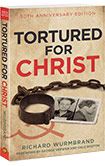
Request a complimentary copy of Tortured for Christ-- and patrick j miron (singular)


The Voice of the Martyrs

Request a complimentary copy of Tortured for Christ

The Voice of the Martyrs invites you to request a complimentary copy of Richard Wurmbrand's international bestseller, Tortured for Christ. Simply complete the address form below. Along with the the copy of Tortured for Christ, you will receive a complimentary subscription to The Voice of the Martyrs award-winning monthly newsletter. This timely newsletter will keep you informed on Christian persecution worldwide while sharing practical opportunities to help Christians who are persecuted for their faith.
TFC Book
* Denotes required field. This offer is available to U.S. residents only. Offer limited to one complimentary copy per household please.

Your Name and Address

© 2011 The Voice of the Martyrs

.357: The Council of Trent and Scripture-- the( singular) catholic church and patrick j miron

.357: The Council of Trent and Scripture


The Council of Trent and Scripture

The following is excerpted from Steve Camp's website. When I start to write on a topic, I often find someone has done a better job than I have. Even more often, it is Steve Camp.

The Council of Trent was a Catholic council held from 1545-1563 in an attempt to destroy the progress of the Protestant Reformation. This council denied every Reformation doctrine, including Scripture alone and grace alone. Trent hurled 125 anathemas (eternal damnation) against Bible-believing Christians. These proclamations and anathemas were fleshed out in the murderous persecutions vented upon Bible-believing Christians by Rome, and the solemn fact is that the Council of Trent has never been annulled.

DECLARATIONS OF THE COUNCIL OF TRENT FOURTH SESSION: DECREE CONCERNING THE CANONICAL SCRIPTURES: "If anyone does not accept as sacred and canonical the aforesaid books in their entirety and with all their parts [the 66 books of the Bible plus 12 apocryphal books, being two of Paralipomenon, two of Esdras, Tobias, Judith, Wisdom, Ecclesiasticus, Baruch, Sophonias, two of Macabees], as they have been accustomed to be read in the Catholic Church and as they are contained in the old Latin Vulgate Edition, and knowingly and deliberately rejects the aforesaid traditions, LET HIM BE ANATHEMA.

Scripture says: "All Scripture is inspired by God and profitable for teaching, for reproof, for correction, for training in righteousness; so that the man of God may be adequate, equipped for every good work" -2 Timothy 3:16-17."Beloved, while I was making every effort to write you about our common salvation, I felt the necessity to write to you appealing that you contend earnestly for the faith which was once for all handed down to the saints" -Jude 3."But know this first of all, that (N)no prophecy of Scripture is a matter of one's own interpretation, for no prophecy was ever made by an act of human will, but men moved by the Holy Spirit spoke from God" -2 Peter 1:20-21."You hypocrites, rightly did Isaiah prophesy of you: THIS PEOPLE HONORS ME WITH THEIR LIPS, BUT THEIR HEART IS FAR AWAY FROM ME. 'BUT IN VAIN DO THEY WORSHIP ME, TEACHING AS DOCTRINES THE PRECEPTS OF MEN'" -Matthew 15:7-9.

SIXTH SESSION, CANONS CONCERNING JUSTIFICATION: "If anyone says that justifying faith is nothing else than confidence in divine mercy, which remits sins for Christ's sake, or that it is this confidence alone that justifies us, LET HIM BE ANATHEMA" (Canons Concerning Justification, Canon 12).

Scripture says: "because by the works of the Law no flesh will be justified in His sight; for through the Law comes the knowledge of sin. But now apart from the Law the righteousness of God has been manifested, being witnessed by the Law and the Prophets, even the righteousness of God through faith in Jesus Christ for all those who believe; for there is no distinction; for all have sinned and fall short of the glory of God, being justified as a gift by His grace through the redemption which is in Christ Jesus; whom God displayed publicly as a propitiation in His blood through faith This was to demonstrate His righteousness, because in the forbearance of God He passed over the sins previously committed; for the demonstration, I say, of His righteousness at the present time, so that He would be just and the justifier of the one who has faith in Jesus. Where then is boasting? It is excluded By what kind of law? Of works? No, but by a law of faith. For we maintain that a man is justified by faith apart from works of the Law" -Romans 3:20-29

SIXTH SESSION, CANONS CONCERNING JUSTIFICATION: "If anyone says that the justice received is not preserved and also not increased before God through good works, but that those works are merely the fruits and signs of justification obtained, but not the cause of its increase, LET HIM BE ANATHEMA" (Canons Concerning Justification, Canon 24).

Scripture says: "For if Abraham was justified by works, he has something to boast about, but not before God. For what does the Scripture say? "ABRAHAM BELIEVED GOD, AND IT WAS CREDITED TO HIM AS RIGHTEOUSNESS." Now to the one who works, his wage is not credited as a favor, but as what is due. But to the one who does not work, but believes in Him who justifies the ungodly, his faith is credited as righteousness, just as David also speaks of the blessing on the man to whom God credits righteousness apart from works: "BLESSED ARE THOSE WHOSE LAWLESS DEEDS HAVE BEEN FORGIVEN, AND WHOSE SINS HAVE BEEN COVERED. "BLESSED IS THE MAN WHOSE SIN THE LORD WILL NOT TAKE INTO ACCOUNT" -Romans 4:2-8."He made Him who knew no sin to be sin on our behalf, so that we might become the righteousness of God in Him" -2 Corinthians 5:21 "Therefore, having been justified by faith, we have peace with God through our Lord Jesus Christ" -Romans 5:1Explanatory Note: (We are not justified by an infused righteousness that we obtain via papal authority applying merit from "The Treasury of Merit" imputed to us from Mary, the saints, the Pope himself or through indulgences, so that we can be freed from Purgatory cleansing for sins we committed. Justification is a forensic, legal declaration secured soley by Christ alone on the cross as a propitiatory sacrifice for our sins. But even more importantly, being justified through Jesus Christ our Lord is being clothed with the perfect of righteousness of Christ through faith. Christ on the cross was treated as if He lived my life-my sin was imputed to Him though He is holy... sinless; so that I could be treated as if I lived His life-His righteousness imputed to me, though I am a sinner and by nature a child of wrath worthy only to spend eternity in an everlasting hell (Ephesians 2:1-3). My own righteousness, even religious good works, and all "graces" obtained under papal decree, are nothing but filthy rags before a holy God (Isaiah 64:6). Faith is the instrument by which this becomes a reality--and even that faith is the gift of God (Ephesians 2:8-9.)

SIXTH SESSION, CANONS CONCERNING JUSTIFICATION: "If anyone says that the Catholic doctrine of justification as set forth by the holy council in the present decree, derogates in some respect from the glory of God or the merits of our Lord Jesus Christ, and does not rather illustrate the truth of our faith and no less the glory of God and of Christ Jesus, LET HIM BE ANATHEMA" (Canons Concerning Justification, Canon 33).

Scripture says: "I am amazed that you are so quickly deserting Him who called you by the grace of Christ, for a different gospel; which is really not another; only there are some who are disturbing you and want to distort the gospel of Christ. But even if we, or an angel from heaven, should preach to you a gospel contrary to what we have preached to you, he is to be accursed! As we have said before, so I say again now, if any man is preaching to you a gospel contrary to what you received, he is to be accursed! -Galatians 1:6-9"Not everyone who says to Me, 'Lord, Lord,' will enter the kingdom of heaven, but he who does the will of My Father who is in heaven will enter. "Many will say to Me on that day, 'Lord, Lord, did we not prophesy in Your name, and in Your name cast out demons, and in Your name perform many miracles?' "And then I will declare to them, 'I never knew you; DEPART FROM ME, YOU WHO PRACTICE LAWLESSNESS' -Matthew 7:21-24"For all of us have become like one who is unclean, and all our righteous deeds are like a filthy garment; And all of us wither like a leaf, and our iniquities, like the wind, take us away" -Isaiah 64:6"for we are the true circumcision, who worship in the Spirit of God and glory in Christ Jesus and put no confidence in the flesh, although I myself might have confidence even in the flesh. If anyone else has a mind to put confidence in the flesh, I far more: circumcised the eighth day, of the nation of Israel, of the tribe of Benjamin, a Hebrew of Hebrews; as to the Law, a Pharisee; as to zeal, a persecutor of the church; as to the righteousness which is in the Law, found blameless. But whatever things were gain to me, those things I have counted as loss for the sake of Christ. More than that, I count all things to be loss in view of the surpassing value of knowing Christ Jesus my Lord, for whom I have suffered the loss of all things, and count them but rubbish so that I may gain Christ, and may be found in Him, not having a righteousness of my own derived from the Law, but that which is through faith in Christ, the righteousness which comes from God on the basis of faith" -Philippians 3:3-9

SEVENTH SESSION, CANONS ON BAPTISM: "If anyone says that in the Roman Church, which is the mother and mistress of all churches, there is not the true doctrine concerning the sacrament of baptism, LET HIM BE ANATHEMA" (Canons on Baptism, Canon 3).

Scripture says: "and in Him you were also circumcised with a circumcision made without hands, in the removal of the body of the flesh by the circumcision of Christ; having been buried with Him in baptism, in which you were also raised up with Him through faith in the working of God, who raised Him from the dead. When you were dead in your transgressions and the uncircumcision of your flesh, He made you alive together with Him, having forgiven us all our transgressions" -Colossians 2:11-13

SEVENTH SESSION, CANONS ON BAPTISM: "If anyone says that baptism is optional, that is, not necessary for salvation, LET HIM BE ANATHEMA" (Canons on Baptism, Canon 5).

Scripture says:"who once were disobedient, when the patience of God kept waiting in the days of Noah, during the construction of the ark, in which a few, that is, eight persons, were brought safely through the water. Corresponding to that, baptism now saves you--)not the removal of dirt from the flesh, but an appeal to God for a good conscience--through the resurrection of Jesus Christ, who is at the right hand of God, having gone into heaven, after angels and authorities and powers had been subjected to Him" -1 Peter 3:20-22 Explanatory Note: (The fluid has no saving power nor does the act of being baptized. Salvation is by grace through faith in Christ alone; it is not of works lest any man should boast. If baptism was necessary for salvation and a sacramental means of grace as Trent claims, why does the Apostle John say that the Lord baptized no one (cf, John 4:1-2)? And the same was said of Paul in 1 Corinthians 1:14-16. Furthermore Paul lucidly says, "Christ did not send me to baptize, but to preach the gospel, not in cleverness of speech, so that the cross of Christ would not be made void." If baptism is part of the gospel by Rome's canon, why does the Apostle Paul definitivly claim the exact opposite under divine inspiration?Listen, no ordinance or sacrament of any church, Pope or council can add one thing to the once for all sacrifice and bodily resurrection of Jesus Christ the Righteous for our salvation.)

SEVENTH SESSION, CANONS ON BAPTISM: "If anyone says that children, because they have not the act of believing, are not after having received baptism to be numbered among the faithful, and that for this reason are to be rebaptized when they have reached the years of discretion; or that it is better that the baptism of such be omitted than that, while not believing by their own act, they should be baptized in the faith of the Church alone, LET HIM BE ANATHEMA" (Canons on Baptism, Canon 13).

Scripture says:"Therefore let all the house of Israel know for certain that God has made Him both Lord and Christ--this Jesus whom you crucified." Now when they heard this, they were pierced to the heart, and said to Peter and the rest of the apostles, "Brethren, what shall we do?" Peter said to them, "Repent, and each of you be baptized in the name of Jesus Christ for the forgiveness of your sins; and you will receive the gift of the Holy Spirit" -Acts 2:36-38"Therefore we have been buried with Him through baptism into death, so that as Christ was raised from the dead through the glory of the Father, so we too might walk in newness of life" -Romans 6:4

SEVENTH SESSION, CANONS ON CONFIRMATON: "If anyone says that the confirmation of those baptized is an empty ceremony and not a true and proper sacrament; or that of old it was nothing more than a sort of instruction, whereby those approaching adolescence gave an account of their faith to the Church, LET HIM BE ANATHEMA" (Canons on Confirmation, Canon 1).

Scripture says:"Blessed be the God and Father of our Lord Jesus Christ, who has blessed us with every spiritual blessing in the heavenly places in Christ, just as He chose us in Him before the foundation of the world, that we would be holy and blameless before Him In love He predestined us to adoption as sons through Jesus Christ to Himself, according to the kind intention of His will, to the praise of the glory of His grace, which He freely bestowed on us in the Beloved. In Him we have redemption through His blood, the forgiveness of our trespasses, according to the riches of His grace which He lavished on us. In all wisdom and insight" -Ephesians 1:3-8

THIRTEENTH SESSION, CANONS ON THE MOST HOLY SACRAMENT OF THE EUCHARIST: "If anyone denies that in the sacrament of the most Holy Eucharist are contained truly, really and substantially the body and blood together with the soul and divinity of our Lord Jesus Christ, and consequently the whole Christ, but says that He is in it only as in a sign, or figure or force, LET HIM BE ANATHEMA" (Canons on the Most Holy Sacrament of the Eucharist, Canon 1).

Scripture says:"While they were eating, Jesus took some bread, and after a blessing, He broke it and gave it to the disciples, and said, "Take, eat; this is My body."And when He had taken a cup and given thanks, He gave it to them, saying, "Drink from it, all of you; for this is My blood of the covenant, which is poured out for many for forgiveness of sins -Matthew 26:26-28 Explanatory Note: (This was only a symbol--not our Lord's literal body.)

THIRTEENTH SESSION, CANONS ON THE MOST HOLY SACRAMENT OF THE EUCHARIST: "If anyone says that Christ received in the Eucharist is received spiritually only and not also sacramentally and really, LET HIM BE ANATHEMA" (Canons on the Most Holy Sacrament of the Eucharist, Canon 8).

Scripture says:"In the same way He took the cup also after supper, saying, "This cup is the new covenant in My blood; do this, as often as you drink it, in remembrance of Me." For as often as you eat this bread and drink the cup, you proclaim the Lord's death until He comes. Therefore whoever eats the bread or drinks the cup of the Lord in an unworthy manner, shall be guilty of the body and the blood of the Lord. But a man must examine himself, and in so doing he is to eat of the bread and drink of the cup. For he who eats and drinks, eats and drinks judgment to himself if he does not judge the body rightly. For this reason many among you are weak and sick, and a number sleep. -1 Corinthians 11:25-30 Explanatory Note: (It is received as an outward symbol only of the finished work of Christ on the cross. The bread and wine have no inherent power in themselves and do not become the literal body and blood of our Lord Jesus Christ. This would suggest that the Lord's sacrifice on the cross was not sufficient and that a continual "bloody" sacrifice through the mass is necessary for salvation; making communion a work.)

FOURTEENTH SESSION, CANONS CONCERNING THE MOST HOLY SACRAMENT OF PENANCE: "If anyone says that in the Catholic Church penance is not truly and properly a sacrament instituted by Christ the Lord for reconciling the faithful of God as often as they fall into sin after baptism, LET HIM BE ANATHEMA" (Canons Concerning the Most Holy Sacrament of Penance, Canon 1).

Scripture says:"For the grace of God has appeared, bringing salvation to all men, instructing us to deny ungodliness and worldly desires and to live sensibly, righteously and godly in the present age, looking for the blessed hope and the appearing of the glory of our great God and Savior, Christ Jesus" -Titus 3:11-13"I now rejoice, not that you were made sorrowful, but that you were made sorrowful to the point of repentance; for you were made sorrowful according to the will of God, so that you might not suffer loss in anything through us. For the sorrow that is according to the will of God produces a repentance without regret, leading to salvation, but the sorrow of the world produces death" -2 Corinthians 7:9-10"But God demonstrates His own love toward us, in that while we were yet sinners, Christ died for us. Much more then, having now been justified by His blood, we shall be saved from the wrath of God through Him. For if while we were enemies we were reconciled to God through the death of His Son, much more, having been reconciled, we shall be saved by His life. And not only this, but we also exult in God through our Lord Jesus Christ, through whom we have now received the reconciliation" -Romans 5:8-11 Explanatory Note: (It is the grace of our Lord Jesus Christ, God's gift of repentance, and His daily sanctifying grace in our lives that conforms us to Christlikeness. There is no other sacrifice or penance needed for our sins--it was all accomplished in Christ alone. All of our sins, their guilt and penalty, and the wrath of God which burns against us and our sin was completely satisfied in the once for all sacrifice of Jesus Christ on the cross and secured by His bodily resurrection from the dead. There is no other penance needed or required by God. To suggest otherwise is to say that Christ's sacrificial work is not enough, "it is finished" as our Lord cried from Calvary is a lie, it turns the grace of God into lasciviousness and perverts the gospel of grace of our Lord. That is nothing less than a hellish, satanic deception.)

FOURTEENTH SESSION, CANONS CONCERNING THE MOST HOLY SACRAMENT OF PENANCE: "If anyone denies that sacramental confession was instituted by divine law or is necessary to salvation; or says that the manner of confessing secretly to a priest alone, which the Catholic Church has always observed from the beginning and still observes, is at variance with the institution and command of Christ and is a human contrivance, LET HIM BE ANATHEMA" (Canons Concerning the Most Holy Sacrament of Penance, Canon 7).

Scripture says:"Therefore, He had to be made like His brethren in all things, so that He might become a merciful and faithful high priest in things pertaining to God, to make propitiation for the sins of the people" -Hebrews 2:17"For we do not have a high priest who cannot sympathize with our weaknesses, but One who has been tempted in all things as we are, yet without sin" -Hebrews 4:15"By this will we have been sanctified through the offering of the body of Jesus Christ once for all. Every priest stands daily ministering and offering time after time the same sacrifices, which can never take away sins; but He, having offered one sacrifice for sins for all time, SAT DOWN AT THE RIGHT HAND OF GOD, waiting from that time onward UNTIL HIS ENEMIES BE MADE A FOOTSTOOL FOR HIS FEET. For by one offering He has perfected for all time those who are sanctified" -Hebrews 10:10-14 Explanatory Note: (We have been thoroughly and completely sanctified, made holy and set apart from this world unto eternal life by the Lord Jesus Christ Himself. He alone is our only priest, our High Priest, not like the unholy, fallible, sinful priests of earth. We are complete in Christ alone.)

FOURTEENTH SESSION, CANONS CONCERNING THE MOST HOLY SACRAMENT OF PENANCE: "If anyone says that the confession of all sins as it is observed in the Church is impossible and is a human tradition to be abolished by pious people; or that each and all of the faithful of Christ or either sex are not bound thereto once a year in accordance with the constitution of the great Lateran Council, and that for this reason the faithful of Christ are to be persuaded not to confess during Lent, LET HIM BE ANATHEMA" (Canons Concerning the Most Holy Sacrament of Penance, Canon 8).

Scripture says:"If we confess our sins, He is faithful and righteous to forgive us our sins and to cleanse us from all unrighteousness" -1 John 1:9"How much severer punishment do you think he will deserve who has trampled under foot the Son of God, and has regarded as unclean the blood of the covenant by which He [Jesus Christ the Lord] was sanctified, and has insulted the Spirit of grace?" -Hebrews 10:29 Explanatory Note: (Confess means "to agree with." When we confess our sins to the Lord, we are agreeing with Him that what we have done is sin, sin against Him, and He cleanses us from all unrighteousness. No Pope, Cardinal, Bishop, or Parish Priest can forgive sin, issue absolution, or cleanse our sinful unclean heart.)

FOURTEENTH SESSION, CANONS CONCERNING THE MOST HOLY SACRAMENT OF PENANCE: "If anyone says that God always pardons the whole penalty together with the guilt and that the satisfaction of penitents is nothing else than the faith by which they perceive that Christ has satisfied for them, LET HIM BE ANATHEMA" (Canons Concerning the Most Holy Sacrament of Penance, Canon 8).

Scripture says:"Therefore, just as through one man sin entered into the world, and death through sin, and so death spread to all men, because all sinned--for until the Law sin was in the world, but sin is not imputed when there is no law. Nevertheless death reigned from Adam until Moses, even over those who had not sinned in the likeness of the offense of Adam, who is a type of Him who was to come. But the free gift is not like the transgression. For if by the transgression of the one the many died, much more did the grace of God and the gift by the grace of the one Man, Jesus Christ, abound to the many. The gift is not like that which came through the one who sinned; for on the one hand the judgment arose from one transgression resulting in condemnation, but on the other hand the free gift arose from many transgressions resulting in justification. For if by the transgression of the one, death reigned through the one, much more those who receive the abundance of grace and of the gift of righteousness will reign in life through the One, Jesus Christ. So then as through one transgression there resulted condemnation to all men, even so through one act of righteousness there resulted justification of life to all men" -Romans 5:12-18

TWENTY-SECOND SESSION, CANONS ON THE SACRIFICE OF THE MASS: "If anyone says that in the mass a true and real sacrifice is not offered to God; or that to be offered is nothing else than that Christ is given to us to eat, LET HIM BE ANATHEMA" (Canons on the Sacrifice of the Mass, Canon 1).

Scripture says:"For the death that He died, He died to sin once for all; but the life that He lives, He lives to God" -Romans 6:10"who does not need daily, like those high priests, to offer up sacrifices, first for His own sins and then for the sins of the people, because this He did once for all when He offered up Himself" -Hebrews 7:27"and not through the blood of goats and calves, but through His own blood, He entered the holy place once for all, having obtained eternal redemption" -Hebrews 9:12"By this will we have been sanctified through the offering of the body of Jesus Christ once for all" -Hebrews 10:10"For Christ also died for sins once for all, the just for the unjust, so that He might bring us to God, having been put to death in the flesh, but made alive in the spirit" -1 Peter 3:18

TWENTY-SECOND SESSION, CANONS ON THE SACRIFICE OF THE MASS: "If anyone says that the sacrifice of the mass is one only of praise and thanksgiving; or that it is a mere commemoration of the sacrifice consummated on the cross but not a propitiatory one; or that it profits him only who receives, and ought not to be offered for the living and the dead, for sins, punishments, satisfactions, and other necessities, LET HIM BE ANATHEMA" (Canons on the Sacrifice of the Mass, Canon 3).

Scripture says:"whom God displayed publicly as a propitiation in His blood through faith This was to demonstrate His righteousness, because in the forbearance of God He passed over the sins previously committed" -Romans 3:25"Therefore, He had to be made like His brethren in all things, so that He might become a merciful and faithful high priest in things pertaining to God, to make propitiation for the sins of the people" -Hebrews 2:17"and He Himself is the propitiation for our sins; and not for ours only, but also for those of the whole world" -1 John 2:2"In this is love, not that we loved God, but that He loved us and sent His Son to be the propitiation for our sins" -1 John 4:10

TWENTY-SECOND SESSION, CANONS ON THE SACRIFICE OF THE MASS: "If anyone says that it is a deception to celebrate masses in honor of the saints and in order to obtain their intercession with God, as the Church intends, LET HIM BE ANATHEMA" (Canons on the Sacrifice of the Mass, Canon 5).

Scripture says:"and He who searches the hearts knows what the mind of the Spirit is, because He intercedes for the saints according to the will of God" -Romans 8:27"Therefore He is able also to save forever those who draw near to God through Him, since He always lives to make intercession for them" -Hebrews 7:25 Explanatory Note: (Only One intercedes for us: Jesus Christ the Righteous. It is not Mary, the Saints, the Pope, or the Church. Why? It takes a perfect High Priest in heaven to intercede for us. Christ alone is worthy makes that intercession for He alone is seated at the right hand of the throne of God--the place of rule and authority.)

TWENTY-THIRD SESSION, CANONS ON THE SACRAMENT OF ORDER: "If anyone says that there is not in the New Testament a visible and external priesthood, or that there is no power of consecrating and offering the true body and blood of the Lord and of forgiving and retaining sins, but only the office and bare ministry of preaching the Gospel; or that those who do not preach are not priests at all, LET HIM BE ANATHEMA" (Canons on the Sacrifice of the Mass, Canon 1).

Scripture says:"Therefore, I exhort the elders among you, as your fellow elder and witness of the sufferings of Christ, and a partaker also of the glory that is to be revealed, shepherd the flock of God among you, exercising oversight not under compulsion, but voluntarily, according to the will of God; and not for sordid gain, but with eagerness; nor yet as lording it over those allotted to your charge, but proving to be examples to the flock. And when the Chief Shepherd appears, you will receive the unfading crown of glory" -Peter 5:1-4

TWENTY-THIRD SESSION, CANONS ON THE SACRAMENT OF ORDER: "If anyone says that the bishops who are chosen by the authority of the Roman pontiff are not true and legitimate bishops, but merely human deception, LET HIM BE ANATHEMA" (Canons on the Sacrifice of the Mass, Canon 8).

Scripture says:"It is a trustworthy statement: if any man aspires to the office of overseer, it is a fine work he desires to do. These men must also first be tested -1 Timothy 3:1, 10a"You therefore, my son, be strong in the grace that is in Christ Jesus. The things which you have heard from me in the presence of many witnesses, entrust these to faithful men who will be able to teach others also" -2 Timothy 2:1-2"I solemnly charge you in the presence of God and of Christ Jesus, who is to judge the living and the dead, and by His appearing and His kingdom: preach the word; be ready in season and out of season; reprove, rebuke, exhort, with great patience and instruction. For the time will come when they will not endure sound doctrine; but wanting to have their ears tickled, they will accumulate for themselves teachers in accordance to their own desires, and will turn away their ears from the truth and will turn aside to myths. But you, be sober in all things, endure hardship, do the work of an evangelist, fulfill your ministry" -2 Timothy 4:1-5

TWENTY-FIFTH SESSION, DECREE ON PURGATORY: "Since the Catholic Church, instructed by the Holy Ghost, has, following the sacred writings and the ancient tradition of the Fathers, taught in sacred councils and very recently in this ecumenical council that there is a purgatory, and that the souls there detained are aided by the suffrages of the faithful and chiefly by the acceptable sacrifice of the altar, the holy council commands the bishops that they strive diligently to the end that the sound doctrine of purgatory, transmitted by the Fathers and sacred councils, be believed and maintained by the faithful of Christ, and be everywhere taught and preached."Scripture says:"it is appointed for men to die once and after this comes judgment" -Hebrews 9:27TWENTY-FIFTH SESSION, ON THE INVOCATION, VENERATION, AND RELICS OF SAINTS, AND ON SACRED IMAGES: "The holy council commands all bishops and others who hold the office of teaching and have charge of the cura animarum, that in accordance with the usage of the Catholic and Apostolic Church, received from the primitive times of the Christian religion, and with the unanimous teaching of the holy Fathers and the decrees of sacred councils, they above all instruct the faithful diligently in matters relating to intercession and invocation of the saints, the veneration of relics, and the legitimate use of images, teaching them that the saints who reign together with Christ offer up their prayers to God for men, that it is good and beneficial suppliantly to invoke them and to have recourse to their prayers, assistance and support in order to obtain favors from God through His Son, Jesus Christ our Lord, who alone is our redeemer and savior; and that they think impiously who deny that the saints who enjoy eternal happiness in heaven are to be invoked, or who assert that they do not pray for men, or that our invocation of them to pray for each of us individually is idolatry, or that it is opposed to the word of God and inconsistent with the honor of the one mediator of God and men, Jesus Christ, or that it is foolish to pray vocally or mentally to those who reign in heaven."Scripture says:"who is the one who condemns? Christ Jesus is He who died, yes, rather who was raised, who is at the right hand of God, who also intercedes for us" -Romans 8:34"For there is one God, and one mediator also between God and men, the man Christ Jesus" -1 Timothy 2:5
Patrick j miron-- Judge for you---. Are these the pure doctrines of biblical Christianity, or are they traditional Catholic heresies?

Judge for you. Are these the pure doctrines of biblical Christianity, or are they traditional Catholic heresies?


The Mass a Re-sacrifice of Christ
“Hence the Mass, the Lord’s Supper, is at the same time and inseparably: a sacrifice in which the sacrifice of the cross is perpetuated; a memorial of the death and resurrection of the Lord, who said ‘do this in memory of me’ (Lk. 22:19) … In the Mass, therefore, the sacrifice and sacred meal belong to the same mystery—so much so that they are linked by the closest bond. For in the sacrifice of the Mass Our Lord is immolated when ‘he begins to be present sacramentally as the spiritual food of the faithful under the appearances of bread and wine.’ … For in it Christ perpetuates in an unbloody manner the sacrifice offered on the cross, offering himself to the Father for the world’s salvation through the ministry of priests” (Vatican II, The Constitution on the Sacred Liturgy, Instruction on the Worship of the Eucharistic Mystery, Introduction, C 1,2, p. 108).


Christ Present in the Elements of the Mass
“In this sacrament Christ is present in a unique way, whole and entire, God and man, substantially and permanently. This presence of Christ under the species ‘is called real, not in an exclusive sense, as if the other kinds of presence were not real, but par excellence” (Vatican II, The Constitution on the Sacred Liturgy, Instruction on the Worship of the Eucharistic Mystery, Chap. 1, E, p. 114).

“In the celebration of Mass there is proclaimed the wonderful mystery of the real presence of Christ our Lord under the eucharistic species. The Second Vatican Council and other magisterial pronouncements of the Church have confirmed this truth in the same sense and the same words as those in which the Council of Trent defined it as an article of faith. ... Christ becomes present through an essential change in the elements” (Vatican II, The Constitution on the Sacred Liturgy, General Instruction on the Roman Missal, foreword, 3, p. 154).
The Mass Is a Part of Salvation
“As often as the sacrifice of the cross by which ‘Christ our Pasch is sacrificed’ (1 Cor. 5:7) is celebrated on the altar, the work of our redemption is carried out” (Dogmatic Constitution on the Church, Chapter 1, 3, p. 324).


The Mass the Center of Christian life
“The celebration of the Mass ... is the centre of the whole Christian life for the universal Church, the local Church and for each and every one of the faithful. For therein is the culminating action whereby God sanctifies the world in Christ and men worship the Father as they adore him through Christ the Son of God” (Vatican II, The Constitution on the Sacred Liturgy, General Instruction on the Roman Missal, chap. 1, 1, p. 159).
Christ Is to Be Worshipped in the Wafer
“The reservation of the sacred species for the sick ... led to the praiseworthy custom of adoring the heavenly food which is preserved in churches. This practice of adoration has a valid and firm foundation, especially since belief in the real presence of the Lord has as its natural consequence the external and public manifestation of that belief” (Vatican II, The Constitution on the Sacred Liturgy, Instruction on the Worship of the Eucharistic Mystery, Chap. 3, I A, p. 131).

“The faithful should therefore strive to worship Christ our Lord in the Blessed Sacrament. ... Pastors [priests] should exhort them to this, and set them a good example. ... The place in a church or oratory where the Blessed Sacrament is reserved in the tabernacle [place where the consecrated wafer is kept and worshiped between Masses] should be truly prominent. It ought to be suitable for private prayer so that the faithful may easily and fruitfully, by private devotion also, continue to honour our Lord in this sacrament” (Vatican II, The Constitution on the Sacred Liturgy, Instruction on the Worship of the Eucharistic Mystery, Chap. 3, I B, p. 132).

“Devotion, both private and public, towards the sacrament of the altar even outside Mass ... is highly recommended by the Church, since the eucharistic sacrifice is the source and summit of the whole Christian life” (Vatican II, The Constitution on the Sacred Liturgy, Instruction on the Worship of the Eucharistic Mystery, Chap. 3, III, p. 134).

“All the faithful ought to show to this most holy sacrament the worship which is due to the true God, as has always been the custom of the Catholic Church. Nor is it to be adored any the less because it was instituted by Christ to be eaten. For even in the reserved sacrament he is to be adored because he is substantially present there through that conversion of bread and wine which, as the Council of Trent tells us, is most aptly named transubstantiation” (Vatican II, The Constitution on the Sacred Liturgy, Instruction on the Worship of the Eucharistic Mystery, Intro., C 6, pp. 109,10).

“It is necessary to instruct the faithful that Jesus Christ is the Lord and Saviour and that the same worship and adoration given to God is owed to him present under the sacramental signs” (Vatican II, The Constitution on the Sacred Liturgy, Instruction on Facilitating Sacramental Eucharistic Communion in Particular Circumstances, Piety and Reverence Towards the Sacrament, p. 221).
The Wafer to Be Carried in Processions
“In processions in which the Blessed Sacrament is solemnly carried through the streets to the singing of hymns, especially on the feast of Corpus Christi, the Christian people give public witness to their faith and devotion towards this sacrament” (Vatican II, The Constitution on the Sacred Liturgy, Instruction on the Worship of the Eucharistic Mystery, Chap. 3, III, p. 134).
Masses for the Dead
“Holy Mother Church is extremely concerned for the faithful departed. She has decided to intercede for them to the fullest extent in every Mass and abrogates every special privilege in this matter” (Vatican II, The Constitution on the Sacred Liturgy, Apostolic Constitution on the Revision of Indulgences, V, Indulgences not Attached to Things and Places, Norms, 20, p. 87).

“The Church offers the Paschal Sacrifice [the Mass] for the Dead so that ... the dead may be helped by the prayers and the living may be consoled by hope” (Vatican II, The Constitution on the Sacred Liturgy, General Instruction on the Roman Missal, VIII, Masses for the Dead, 335, p. 197).
Mass Must Be Performed in Strict Accordance with Catholic Tradition
“To safeguard the success of these celebrations and to obtain a greater spiritual efficaciousness ... attention must be given to the form. ... The texts of the Mass should be taken from the missal or from approved supplements. Every change ... is arbitrary and therefore rejected ... The furnishings of the altar (cross, altar cloth, candles, missal, purificator, corporal, hand towel and communion plate), the sacred vessels (chalice, paten, pyx), the vestments (amice, alb, cincture, stole and chasuble) should be, in number, form and quality, as desired by present legislation. ... The ritual gestures and the ceremonies of the celebrant, as well as the attitude of the participants should be those prescribed for the normal eucharistic celebration” (Vatican II, The Constitution on the Sacred Liturgy, Instruction on Masses for Special Groups, 11a,b, p. 146).

patrick j miron and the SINGULAR- catholic church


IS THE ROMAN CATHOLIC CHURCH CHANGING?


Updated June 17, 2008 (first published 1984) (David Cloud, Fundamental Baptist Information Service, P.O. Box 610368, Port Huron, MI 48061, 866-295-4143, fbns@wayoflife.org; for instructions about subscribing and unsubscribing or changing addresses, see the information paragraph at the end of the article) -

Because of the superficial changes made in the Roman Catholic Church since Vatican II, those who attempt to expose Roman heresies today are charged with being outdated and ignorant of the true nature of modern Roman Catholicism.

In 1980 I published a book in a South Asian language exposing some of the major cults and heresies within Christianity and warning the national Christians to avoid false teachers. A brief study of Roman Catholicism was included. When the book was published, it wasn’t very popular, and several attempts were made to hinder its distribution. Many of the ecumenical missionaries were frustrated by the book’s call for separation from error. A female Protestant missionary stood up after I had taught a mid-week Bible study and brazenly said, “You aren’t going to tell me I can’t fellowship with my Catholic friends. I attend Mass with them and enjoy it.” The Jesuits attempted to stop the book’s publication. A couple of years later I received the following letter from a man who was involved in the attempt to suppress the book.

“The initial move [to get the book on false teaching suppressed] came from Bhajuram [a Seventh-Day Adventist]. I was asked to consult the Jesuits at St. Xavier’s about the chapter on Catholics. They were quite unhappy about it. However, they were divided as regards any action to take. The Cathonic Church has changed enormously since Vatican II and is no longer a homogeneous monolithic Church” (Letter from Brian Platel, October 22, 1982).

This letter expresses a common view of Catholicism today. Many sincerely believe the Roman Catholic Church is no longer the heretical system it was in past centuries. On every hand, Christian leaders are flirting with Rome. When challenged, these men contend that Catholicism has changed and that God does not want “Christians” to be divided.

Well-known evangelist Billy Graham has joined hands with the Roman Catholic Church in his crusades for decades. Instead of exposing Rome’s apostasy and warning people to flee from its cursed sacramental gospel, he has encouraged seekers to attend “the churches of their choice.” Thousands who have come forward at his meetings have been sent back into the darkness of Catholicism. As early as 1952, Graham was quoted by the Pittsburgh Sun-Telegraph as saying, “Many of the people who have reached a decision for Christ at our meetings have joined the Catholic Church and we have received commendations from Catholic publications for the revived interest in their church following one of our campaigns.”

By 1979, Graham’s practice of sending his converts to the “church of their choice” was reaping big rewards for Rome. Following Graham’s Milwaukee crusade, 3,500 decision cards were given to the Catholic archdiocese for follow-up, the first step of which was a special Mass held in celebration of the “coming home” of these wayward Catholics. Frequently Graham has honored Catholic priests and bishops by having them appear on the platform in his crusades. At a 1962 meeting in Sao Paulo, Brazil, Graham allowed a Catholic bishop to stand on the platform and “bless” those coming forward at the end of the service. Graham has met privately with John Paul II on at least three occasions and has spoken highly of him, calling him a great evangelist. When Time magazine made John Paul II the 1994 “Man of the Year,” Graham stated, “He’s been the strong conscience of the whole Christian world.” Graham has also praised Pope John XXIII and Pope John Paul VI.

Graham’s ecumenical interludes with Rome have set the mood for an entire generation of Evangelicals.


By March 1994, a group of prominent Evangelical leaders joined hands with Catholic priests and others to produce a document entitled “Evangelicals and Catholics Together.” Chuck Colson, Bill Bright, J.I. Packer, Pat Robertson, and several other well-known men proclaimed, “We together, Evangelicals and Catholics, confess our sins against the unity that Christ intends for all his disciples.”

The December 12, 1994, issue of Christianity Today contained two articles defending this document. Both articles were authored by professors at Regent College in Vancouver, British Columbia—J.I. Packer and Alister McGrath. Packer’s article is titled “Why I Signed It,” and his blindness is frightful. Consider some excerpts:

“I was surprised at the violence of initial negative Protestant reaction. ... fear clouds the mind and generates defensive responses that drive wisdom out of the window. ... I ought to have anticipated that some Protestants would say bleak, skewed, fearful, and fear-driven things about this document.”
Dr. Packer confuses biblical reproof with violence and fear mongering. To use the term “violence” to describe the reaction of Bible-believing Christians to his compromise is ridiculous. He is playing the martyr, yet he has not received even one bruise! It is a sad reality of our fallen human nature that those who compromise the truth usually perceive correction as persecution. Good men have merely tried to correct his errors and to reprove him with the Word of God. An example is the statement that was issued by the directors of various missions devoted to winning Roman Catholics to Christ. At a meeting in June 1994, the Association of Fundamentalists Evangelizing Catholics passed a resolution against “Evangelicals & Catholics Together.” These Bible-believing men, many of whom are former Roman Catholic priests and know Rome better than Packer, stated: “The very working of the document underlines the need of our Roman Catholic friends. Their regeneration is Baptism; their sacrifice is the Mass, and the rule of their magisterium silences the Holy Spirit’s biblical messages.” For Packer to claim that such reproof is violent fear mongering is a smokescreen.
We continue with the excerpts from Packer’s article:

“Do we recognize that good evangelical Protestants and good Roman Catholics ... are Christians together? We ought to recognize this, for it is true.”

This is the heart of the error. To say that a good Roman Catholic is a biblical Christian is to deny what Rome teaches about the gospel. Multitudes of Roman Catholics are indeed good people in a human or religious sense, but being a good person has nothing to do with biblical salvation, which is determined exclusively by whether one believes the one and only true gospel of Jesus Christ. A false gospel cannot make one a true Christian. Rome, at the Council of Trent, cursed the biblical gospel of salvation through the finished atonement of Jesus Christ. The Council of Trent, as we will see, is continually recommended and upheld as authoritative by the Vatican II documents as well as the New Catholic Catechism. To Rome, salvation was purchased by Christ and then delivered to the Catholic Church to be administered piecemeal through the sacraments. Blasphemously, Rome states that the sacrifice of Christ was not completed on Calvary, but is repeated perpetually in the Mass. Blasphemously, the Catholic church denies the exclusive mediatorship of Jesus Christ, and places itself, its popes, its Mary, its priests, and its saints in a position of mediatorship between God and men. Blasphemously, Rome declares that its own perverted tradition is as authoritative as the Holy Bible. Rome’s gospel is false; its Jesus is false; its authority is false. As such, it matters not one whit that it holds to certain biblical truths, that it is in certain ways “orthodox.”

The Bible plainly says that those who preach a false gospel are cursed of God (Galatians 1). The heretics who were undermining Paul’s ministry in Galatia doubtless were “orthodox” in many matters. Paul does not say they were denying Christ’s deity or resurrection or that they were questioning the infallibility of Scripture. Their error was in corrupting the gospel of the grace of Christ by intermingling works and grace. That is precisely the way Rome perverts the gospel, and on the authority of Galatians chapter one we can say that this one error alone brings God’s curse.

Roman Catholicism is cursed of God. The only thing God has to do with Roman Catholicism is to call its adherents to biblical salvation and to separation from Rome’s idolatries and heresies. The call from heaven to Rome is “Come out of her, my people, that ye be not partakers of her sins, and that ye receive not of her plagues” (Rev. 18:4).

Dr. Packer continues:

“... the Lund principle is that ecclesiastically divided Christians should not settle for doing separately anything that their consciences allow them to do together. The implication is that otherwise we thwart and grieve the Lord.”

Dr. Packer cites the “Lund principle,” referring to a popular ecumenical interpretation of Christ’s prayer in John 17. This interpretation twists Christ’s words out of context. Christ’s prayer in John 17 focuses on a God-made unity among those who believe and follow “the truth,” not a man-made unity which disregards doctrine and truth. To say that God’s people grieve the Lord for obeying the Bible’s commands to separate from error is insanity.

“... the present needs of both church and community in North America ... cry out for an alliance of good evangelical Protestants with good Roman Catholics ... their domestic differences about salvation and the church should not hinder them from joint action in seeking to re-Christianize the North American milieu.”

Packer says differences about salvation should not hinder joint action between “Christians.” The Bible, on the other hand, plainly says differences about salvation demand separation rather than joint action. “If there come any unto you, and bring not this doctrine, receive him not into your house, neither bid him God speed. For he that biddeth him God speed is partaker of his evil deeds” (2 John 10-11).

“Propagating the basic faith, then, remains the crucial task, and it is natural to think it will best be done as a combined operation.”

This statement is Evangelical doublespeak. How can a Bible-believing Christian and a Roman Catholic propagate “the basic faith” when they hold to different faiths? Again, it is insanity. I can think of no other term that better describes this type of thing. It is apostasy and insanity. Yes, perhaps Dr. Packer is right in one thing. Fear HAS clouded my mind on this matter—fear of God. “...by the fear of the Lord men depart from evil” (Prov. 16:6).

There is even talk of a phenomenon called “evangelical Catholics.” A book by that title by Peter Kreeft was published in 1990 by Thomas Nelson Publishers. The foreword was written by Chuck Colson, who said, “...those who are called of God, whether Catholic or Protestant, are part of the same Body. ... It’s high time that all of us who are Christians come together regardless of the difference of our confessions and our traditions and make common cause to bring Christian values to bear in our society.”

Kreeft speaks of religious experiences he has had while worshipping the idolatrous “sacred heart of Jesus” and participating in the Catholic Mass and describes these as “evangelical moments.”

The February 1992, issue of the Bookstore Journal, the official publication of the Christian Booksellers Association, featured three articles on the theme “The Catholic Market: Dispelling Myths, Building Bridges.” The feature article was written by Peter Kreeft, who is described in the magazine as a “born again, Bible-believing, Spirit-filled, evangelical Catholic.”

All of these ecumenical efforts and proclamations are built upon a lie. The Catholic Church does not stand for biblical Christianity. It has not stood for the truth in the past, and it does not stand for truth today. It has not changed its heretical dogmas. It is as blasphemous and wicked as ever, perhaps more so. To its ancient heresies it has added in the past century the heresies of evolution (even Pope John Paul II believed in it), liberation theology, theological modernism (most Catholic theologians accept the modernistic theories of biblical criticism), universalism (Vatican Council II declared that there is saving light in other religions), and many others.

Is the Roman Catholic system becoming more biblically sound? Is this institution actually rejecting its ancient heresies? The answer is a resounding no! Those voicing these ideas are wrong. Many are willfully deceptive. Others are sincere, but gullible.

Many of today’s Evangelicals have an astounding ignorance of Catholic doctrine and of the nature of the changes by Vatican II.
Vatican II did not change Rome’s doctrinal position! The Roman Catholic Church has not rejected even one of its major heresies. Each major heresy of the Roman Church was strongly reaffirmed by the Vatican II Council, the very council which many believe opened the way for the Catholic Church to become “evangelical.”

Many are calling upon us to forget and forgive the history of Catholicism and to receive the “new Catholicism” with open hearts and arms. This is folly, because
the “new Catholicism” is only the “old Catholicism” in new wrappings. The heart of Catholicism—the papacy, the centralized power of the Vatican, the Roman priesthood, sacramentalism, Mariology, and attendant heresies—remain unchanged.

VATICAN II REITERATES CATHOLIC HERESIES
The Vatican II Council was an official Catholic doctrinal convocation lasting three years (from October 1962 to December 1965) and attended by more than 2400 Roman Catholic bishops. It was led by two popes, John Paul XXIII and Paul VI. These are not just the pronouncements of a Catholic apologist or even of a pope. These are the most authoritative doctrinal pronouncements of modern Roman Catholicism.

The publication cited in the following quotes is Vatican Council II—the Conciliar and Post Conciliar Documents. This volume is published by the Roman Catholic Church and contains the following Imprimatur [a Latin word meaning “let it be printed,” showing it has been approved for publication by the Catholic hierarchy]: Walter P. Kellenberg, D.D., Bishop of Rockville Centre, August 12, 1975.

Judge for yourself. Are these the pure doctrines of biblical Christianity, or are they traditional Catholic heresies?
The Mass a Re-sacrifice of Christ
“Hence the Mass, the Lord’s Supper, is at the same time and inseparably: a sacrifice in which the sacrifice of the cross is perpetuated; a memorial of the death and resurrection of the Lord, who said ‘do this in memory of me’ (Lk. 22:19) … In the Mass, therefore, the sacrifice and sacred meal belong to the same mystery—so much so that they are linked by the closest bond. For in the sacrifice of the Mass Our Lord is immolated when ‘he begins to be present sacramentally as the spiritual food of the faithful under the appearances of bread and wine.’ … For in it Christ perpetuates in an unbloody manner the sacrifice offered on the cross, offering himself to the Father for the world’s salvation through the ministry of priests” (Vatican II, The Constitution on the Sacred Liturgy, Instruction on the Worship of the Eucharistic Mystery, Introduction, C 1,2, p. 108).
Christ Present in the Elements of the Mass
“In this sacrament Christ is present in a unique way, whole and entire, God and man, substantially and permanently. This presence of Christ under the species ‘is called real, not in an exclusive sense, as if the other kinds of presence were not real, but par excellence” (Vatican II, The Constitution on the Sacred Liturgy, Instruction on the Worship of the Eucharistic Mystery, Chap. 1, E, p. 114).

“In the celebration of Mass there is proclaimed the wonderful mystery of the real presence of Christ our Lord under the eucharistic species. The Second Vatican Council and other magisterial pronouncements of the Church have confirmed this truth in the same sense and the same words as those in which the Council of Trent defined it as an article of faith. ... Christ becomes present through an essential change in the elements” (Vatican II, The Constitution on the Sacred Liturgy, General Instruction on the Roman Missal, foreword, 3, p. 154).
The Mass Is a Part of Salvation
“As often as the sacrifice of the cross by which ‘Christ our Pasch is sacrificed’ (1 Cor. 5:7) is celebrated on the altar, the work of our redemption is carried out” (Dogmatic Constitution on the Church, Chapter 1, 3, p. 324).
The Mass the Center of Christian life
“The celebration of the Mass ... is the centre of the whole Christian life for the universal Church, the local Church and for each and every one of the faithful. For therein is the culminating action whereby God sanctifies the world in Christ and men worship the Father as they adore him through Christ the Son of God” (Vatican II, The Constitution on the Sacred Liturgy, General Instruction on the Roman Missal, chap. 1, 1, p. 159).
Christ Is to Be Worshipped in the Wafer
“The reservation of the sacred species for the sick ... led to the praiseworthy custom of adoring the heavenly food which is preserved in churches. This practice of adoration has a valid and firm foundation, especially since belief in the real presence of the Lord has as its natural consequence the external and public manifestation of that belief” (Vatican II, The Constitution on the Sacred Liturgy, Instruction on the Worship of the Eucharistic Mystery, Chap. 3, I A, p. 131).

“The faithful should therefore strive to worship Christ our Lord in the Blessed Sacrament. ... Pastors [priests] should exhort them to this, and set them a good example. ... The place in a church or oratory where the Blessed Sacrament is reserved in the tabernacle [place where the consecrated wafer is kept and worshiped between Masses] should be truly prominent. It ought to be suitable for private prayer so that the faithful may easily and fruitfully, by private devotion also, continue to honour our Lord in this sacrament” (Vatican II, The Constitution on the Sacred Liturgy, Instruction on the Worship of the Eucharistic Mystery, Chap. 3, I B, p. 132).

“Devotion, both private and public, towards the sacrament of the altar even outside Mass ... is highly recommended by the Church, since the eucharistic sacrifice is the source and summit of the whole Christian life” (Vatican II, The Constitution on the Sacred Liturgy, Instruction on the Worship of the Eucharistic Mystery, Chap. 3, III, p. 134).

“All the faithful ought to show to this most holy sacrament the worship which is due to the true God, as has always been the custom of the Catholic Church. Nor is it to be adored any the less because it was instituted by Christ to be eaten. For even in the reserved sacrament he is to be adored because he is substantially present there through that conversion of bread and wine which, as the Council of Trent tells us, is most aptly named transubstantiation” (Vatican II, The Constitution on the Sacred Liturgy, Instruction on the Worship of the Eucharistic Mystery, Intro., C 6, pp. 109,10).

“It is necessary to instruct the faithful that Jesus Christ is the Lord and Saviour and that the same worship and adoration given to God is owed to him present under the sacramental signs” (Vatican II, The Constitution on the Sacred Liturgy, Instruction on Facilitating Sacramental Eucharistic Communion in Particular Circumstances, Piety and Reverence Towards the Sacrament, p. 221).
The Wafer to Be Carried in Processions
“In processions in which the Blessed Sacrament is solemnly carried through the streets to the singing of hymns, especially on the feast of Corpus Christi, the Christian people give public witness to their faith and devotion towards this sacrament” (Vatican II, The Constitution on the Sacred Liturgy, Instruction on the Worship of the Eucharistic Mystery, Chap. 3, III, p. 134).
Masses for the Dead
“Holy Mother Church is extremely concerned for the faithful departed. She has decided to intercede for them to the fullest extent in every Mass and abrogates every special privilege in this matter” (Vatican II, The Constitution on the Sacred Liturgy, Apostolic Constitution on the Revision of Indulgences, V, Indulgences not Attached to Things and Places, Norms, 20, p. 87).

“The Church offers the Paschal Sacrifice [the Mass] for the Dead so that ... the dead may be helped by the prayers and the living may be consoled by hope” (Vatican II, The Constitution on the Sacred Liturgy, General Instruction on the Roman Missal, VIII, Masses for the Dead, 335, p. 197).
Mass Must Be Performed in Strict Accordance with Catholic Tradition
“To safeguard the success of these celebrations and to obtain a greater spiritual efficaciousness ... attention must be given to the form. ... The texts of the Mass should be taken from the missal or from approved supplements. Every change ... is arbitrary and therefore rejected ... The furnishings of the altar (cross, altar cloth, candles, missal, purificator, corporal, hand towel and communion plate), the sacred vessels (chalice, paten, pyx), the vestments (amice, alb, cincture, stole and chasuble) should be, in number, form and quality, as desired by present legislation. ... The ritual gestures and the ceremonies of the celebrant, as well as the attitude of the participants should be those prescribed for the normal eucharistic celebration” (Vatican II, The Constitution on the Sacred Liturgy, Instruction on Masses for Special Groups, 11a,b, p. 146).
The Wine Can Be Taken Only on Special Occasions
“First, they should be reminded that, according to the Catholic faith, Christ is received whole and entire in a complete sacrament even when people communicate under one kind only [take only the wafer without the juice]. And they are not thereby deprived of any grace necessary for salvation ... With the bishop’s approval and after due instruction the following persons may receive Communion from the chalice ... [there follows 14 groups of persons who are permitted to partake of the juice during special Masses performed at weddings, baptisms, ordinations, and certain retreats]” (Vatican II, The Constitution on the Sacred Liturgy, General Instruction on the Roman Missal, IV, 241, 242, pp. 181-182)

Catholic Traditions on Equal Par with Scripture
“Sacred Tradition and sacred Scripture, then, are bound closely together, and communicate one with the other. For both of them, flowing out from the same divine well-spring, come together in some fashion to form one thing, and move towards the same goal ... Thus it comes about that the Church does not draw her certainty about all revealed truths from the holy Scriptures alone. Hence, both Scripture and Tradition must be accepted and honoured with equal feelings of devotion and reverence” (Dogmatic Constitution on Divine Revelation, Chap. 2, 9, p. 682).
Salvation Is through the Sacraments and the Church
“Just as Christ was sent by the Father so also he sent the apostles ... that they might preach the gospel to every creature and proclaim that the Son of God by his death and resurrection had freed us from the power of Satan and from death, and brought us into the Kingdom of his Father. But he also willed that the work of salvation which they preached should be set in train through the sacrifice and sacraments, around which the entire liturgical [ritualistic] life revolves. Thus by Baptism men are grafted into the paschal mystery of Christ. ... They receive the spirit of adoption as sons” (Constitution on the Sacred Liturgy, Chap. 1, I, 5,6, pp. 23-24).

“In that body the life of Christ is communicated to those who believe and who, through the sacraments, are united in a hidden and real way to Christ in his passion and glorification. Through baptism we are formed in the likeness of Christ: ‘For in one Spirit we were all baptized into one body’ (1 Cor. 12:13). In this sacred rite fellowship in Christ’s death and resurrection is symbolized and is brought about” (Dogmatic Constitution on the Church, Chap. 1, 7, p. 327).

“For it is the liturgy through which, especially in the divine sacrifice of the Eucharist, ‘the work of our redemption is accomplished,’ and it is through the liturgy, especially, that the faithful are enabled to express in their lives and manifest to others the mystery of Christ and the real nature of the true Church” (Constitution on the Sacred Liturgy, Introduction, para. 2).
Salvation Distributed by the Pope
“For ‘God’s only-begotten Son ... has won a treasure for the militant Church ... he has entrusted it to blessed Peter, the key-bearer of heaven, and to his successors who are Christ’s vicars on earth, so that they may distribute it to the faithful for their salvation. They may apply it with mercy for reasonable causes to all who have repented for and have confessed their sins. At times they may remit completely, and at other times only partially, the temporal punishment due to sin in a general as well as in special ways (insofar as they judge it to be fitting in the sight of the Lord). The merits of the Blessed Mother of God and of all the elect ... are known to add further to this treasury’” (ellipsis are in the original) (Constitution on the Sacred Liturgy, Apostolic Constitution on the Revision of Indulgences, Chap. 4, 7, p. 80).
Salvation through the Catholic Church
“For it is through Christ’s Catholic Church alone, which is the universal help towards salvation, that the fulness of the means of salvation can be obtained. It was to the apostolic college alone of which Peter is the head, that we believe that our Lord entrusted all the blessings of the New Covenant, in order to establish on earth the one Body of Christ into which all those should be fully incorporated who belong in any way to the people of God” (Decree on Ecumenism, chap. 1, 3, p. 415).

“This holy Council first of all turns its attention to the Catholic faithful. Basing itself on scripture and tradition, it teaches that the Church, a pilgrim now on earth, is necessary for salvation: the one Christ is mediator and the way of salvation; he is present to us in his body which is the Church. He himself explicitly asserted the necessity of faith and baptism (cf. Mk. 16:16; Jn. 3:5), and thereby affirmed at the same time the necessity of the Church which men enter through baptism as through a door. Hence they could not be saved who, knowing that the Catholic Church was founded as necessary by God through Christ, would refuse either to enter it, or to remain in it” (Dogmatic Constitution on the Church, II, 14, p. 336).
Salvation by Good Works
“From the most ancient times in the Church good works were also offered to God for the salvation of sinners, particularly the works which human weakness finds hard. Because the sufferings of the martyrs for the faith and for God’s law were thought to be very valuable, penitents used to turn to the martyrs to be helped by their merits to obtain a more speedy reconciliation from the bishops. Indeed, the prayers and good works of holy people were regarded as of such great value that it could be asserted that the penitent was washed, cleansed and redeemed with the help of the entire Christian people” (Constitution on the Sacred Liturgy, Apostolic Constution on the Revision of Indulgences, chap. 3, 6, pp. 78,79).
Salvation through Baptism
“By the sacrament of Baptism, whenever it is properly conferred in the way the Lord determined and received with the proper dispositions of soul, man becomes truly incorporated into the crucified and glorified Christ and is reborn to a sharing of the divine life” (Decree on Ecumenism, chap. 3, II, 22, p. 427).
Salvation Is through Indulgences and Ritual
“By means of indulgences those members of the Church who are enduring their purification are united more speedily to the members who are in heaven ... holy Mother Church again recommends the practice of indulgences to the faithful. ... The remission of punishment by distribution from the Church’s treasury is incorporated into it. The Church recommends its faithful not to abandon or neglect the holy traditions of those who have gone before. They should be welcomed in a religious spirit as a precious treasure of the Catholic family and esteemed as such. ... The Church reminds them constantly of the things which should be given preference because they are necessary or at least better and more efficacious helps in the task of winning salvation” (Constitution on the Sacred Liturgy, Apostolic Constitution on the Revision of Indulgences, chap. 4, 10,11, p. 82).
Salvation Can Be Achieved through Non-Christian Religions
“The plan of salvation also includes those who acknowledge the Creator, in the first place amongst whom are the Moslems. These profess to hold the faith of Abraham, and together with us they adore the one, merciful God, mankind’s judge on the last day... Those who, through no fault of their own, do not know the gospel of Christ or his Church, but who nevertheless seek God with a sincere heart, and, moved by grace, try in their actions to do his will as they know it through the dictates of their conscience—those too may achieve eternal salvation” (Dogmatic Constitution on the Church, chap. 2, 16, p. 338).
Salvation Grace Is Not Free but Must Be Earned
“All children of the Church should nevertheless remember that their exalted condition results, not from their own merits, but from the grace of Christ. If they fail to respond in thought, word and deed to that grace, not only shall they not be saved, but they shall be the more severely judged” (Dogmatic Constitution on the Church, chap. 2, 14, p. 337).
The Catholic Church the Only True Church
“This is the sole Church of Christ which in the Creed we profess to be one, holy, catholic and apostolic, which our Saviour, after his resurrection, entrusted to Peter’s pastoral care. ... This Church, constituted and organized as a society in the present world, subsists in the Catholic Church, which is governed by the successor of Peter and by the bishops in communion with him” (Dogmatic Constitution on the Church, chap. 1, 8, p. 329).

“For it is through Christ’s Catholic Church alone, which is the universal help towards salvation, that the fulness of the means of salvation can be obtained. It was to the apostolic college alone of which Peter is the head, that we believe that our Lord entrusted all the blessings of the New Covenant, in order to establish on earth the one Body of Christ into which all those should be fully incorporated who belong in any way to the people of God” (Decree on Ecumenism, chap. 1, 3, p. 415).
The Pope Is the Supreme Head of the Church
“The college or body of bishops has for all that no authority unless united with the Roman Pontiff, Peter’s successor, as its head, whose primatial authority, let it be added, over all, whether pastors or faithful, remains in its integrity. For the Roman Pontiff, by reason of his office as Vicar of Christ, namely, and as pastor of the entire Church, has full, supreme and universal power over the whole Church, a power which he can always exercise unhindered” (Dogmatic Constitution on the Church, chap. 3, 22, p. 344).
The Pope Is the Infallible Teacher
“The Roman Pontiff, head of the college of bishops, enjoys this infallibility in virtue of his office, when, as supreme pastor and teacher of all the faithful—who confirms his brethren in the faith (cf. Lk. 22:32)—he proclaims in an absolute decision a doctrine pertaining to faith or morals. For that very reason his definitions are rightly said to be irreformable by their very nature and not by reason of the assent of the Church... as a consequence they are in no way in need of the approval of others, and do not admit of appeal to any other tribunal. For in such a case the Roman Pontiff does not utter a pronouncement as a private person, but rather does he expound and defend the teaching of the Catholic faith as the supreme teacher of the universal Church, in whom the Church’s charism of infallibility is present in a singular way” (Dogmatic Constitution on the Church, chap. 3, 25, p. 349).

“This loyal submission of the will and intellect must be given, in a special way, to the authentic teaching authority of the Roman Pontiff, even when he does not speak ex cathedra in such wise, indeed, that his supreme teaching authority be acknowledged with respect, and sincere assent be given to decisions made by him, conformably with his manifest mind and intention” (Dogmatic Constitution on the Church, chap. 3, 25, p. 348).
Mary the Sinless Mother of God, Perpetual Virgin, Bodily Assumed into Heaven as Queen over All
“Joined to Christ the head and in communion with all his saints, the faithful must in the first place reverence the memory of the glorious ever Virgin Mary, Mother of God and of our Lord Jesus Christ... Because of the gift of sublime grace she far surpasses all creatures, both in heaven and on earth... The Immaculate Virgin preserved free from all stain of original sin, was taken up body and soul into heavenly glory, when her earthly life was over, and exalted by the Lord as Queen over all things, that she might be the more fully conformed to her Son, the Lord of lords (cf. Apoc. 19:16) and conqueror of sin and death” (Dogmatic Constitution on the Church, chap. 8, I, 52,53; II, 59, pp. 378,381- 382).
Mary Is Co-redemptress, Intercessor
“As St. Irenaeus says, she being obedient, became the cause of salvation for herself and for the whole human race. Hence not a few of the early Fathers gladly assert with him in their preaching ‘DEATH THROUGH EVE, LIFE THROUGH MARY’. THIS UNION OF THE MOTHER WITH THE SON IN THE WORK OF SALVATION IS MADE MANIFEST FROM THE TIME OF CHRIST’S VIRGINAL CONCEPTION UP TO HIS DEATH. She cooperated in the work of the Saviour in an altogether singular way to restore supernatural life to souls. As a result, she is our mother in the order of grace. Mary, sharing as she did even on Calvary, had a part even in the once for all acquisition of the great treasury. Now from this common sharing of will and suffering between Christ and Mary, she ‘merited to become most worthily the REPARATRIX [one who makes amends or atonement] for a lost world,’ and therefore, DISPENSATRIX [one who dispenses] of all the gifts which Jesus gained for us by His death and His blood (Vatican II, Dogmatic Constitution on the Church, chap. 8, II, 56, pp. 380-381).

“Taken up to heaven she did not lay aside this saving office but BY HER MANIFOLD INTERCESSION CONTINUES TO BRING US THE GIFTS OF ETERNAL SALVATION. By her maternal charity, she cares for the brethren of her Son, who still journey on earth surrounded by dangers and difficulties, until they are led into their blessed home. Therefore the Blessed Virgin is invoked in the Church under the titles of ADVOCATE, HELPER, BENEFACTRESS, and MEDIATRIX” (Vatican II, Dogmatic Constitution on the Church, chap. 8, II, 62, pp. 382-383).

Mary to Be Venerated
“Mary has by grace been exalted above all angels and men to a place second only to her Son, as the most holy mother of God who was involved in the mysteries of Christ: she is rightly honoured by a special cult in the Church. ... The sacred synod teaches this Catholic doctrine advisedly and at the same time admonishes all the sons of the Church that the cult, especially the liturgical cult, of the Blessed Virgin, be generously fostered, and that the practices and exercises of devotion towards her, recommended by the teaching authority of the Church in the course of centuries be highly esteemed, and that those decrees, which were given in the early days regarding the cult images of Christ, the Blessed Virgin and the saints, be religiously observed” (Dogmatic Constitution on the Church, chap. 8, IV, The Cult of the Blessed Virgin in the Church, 66,67, pp. 384-385).
Intercessions of and Prayers to Dead Saints
“The ‘treasury of the Church’ ... is the infinite value, which can never be exhausted, which Christ’s merits have before God. ... This treasury includes as well the prayers and good works of the Blessed Virgin Mary. They are truly immesne, unfathomable and even pristine in their value before God. In the treasury, too, are the prayers and good works of all the saints, all those who have followed in the footsteps of Christ the Lord and by his grace have made their lives holy and carried out the mission the Father entrusted to them. In this way they attained their own salvation and at the same time cooperated in saving their brothers in the unity of the Mystical Body. ... The union of the living with their brethren who have fallen asleep in Christ is not broken. ... Now that they are welcomed in their own country and at home with the Lord, through him, with him and in him they intercede unremittingly with the Father on our behalf, offering the merit they acquired on earth through Christ Jesus. ... Their brotherly care is the greatest help to our weakness” (The Constitution on the Sacred Liturgy, Apostolic Constitution on the Revision of Indulgences, chap. 2, 5, pp. 76,77).

“In full consciousness of this communion of the whole Mystical Body of Jesus Christ, the Church in its pilgrim members, from the very earliest days of the Christian religion, has honoured with great respect the memory of the dead ... she has always venerated them, together with the Blessed Virgin Mary and the holy angels, with a special love, and has asked piously for the help of their intercession. ... When, then, we celebrate the eucharistic sacrifice [the Mass] we are most closely united to the worship of the heavenly Church; when in the fellowship of communion we honour and remember the glorious Mary ever virgin, St. Joseph, the holy apostles and martyrs and all the saints” (Dogmatic Constitution on the Church, chap. 8, I, 52,53; II, 59, pp. 375,377).

“Holy Mother Church is extremely concerned for the faithful departed. She has decided to intercede for them to the fullest extent in every Mass and abrogates every special privilege in this matter” (Dogmatic Constitution on the Church, chap. 8, V, Norms, 20, p. 87).
Purgatory Necessary to Purge Sin
“The doctrine of purgatory clearly demonstrates that even when the guilt of sin has been taken away, punishment for it or the consequences of it may remain to be expiated or cleansed. They often are. In fact, in purgatory the souls of those who died in the charity of God and truly repentant, but who had not made satisfaction with adequate penance for their sins and omissions are cleansed after death with punishments designed to purge away their debt” (Constitution on the Sacred Liturgy, Apostolic Constitution on the Revision of Indulgences, chap. 1, 3, p. 75).
Priests Have Special Powers to Bestow Spiritual Blessing
“However, the Lord also appointed certain men as ministers, in order that they might be united in one body in which ‘all the members have not the same function’ (Rom. 12:4). These men were to hold in the community of the faithful the sacred power of Order, that of offering sacrifice and forgiving sins, and were to exercise the priestly office publicly on behalf of men in the name of Christ” (Decree on the Ministry and Life of Priests, chap. 1, 2, p. 776).

“Priests, while being taken from amongst men and appointed for men in the things that appertain to God that they may offer gifts and sacrifices for sins, live with the rest of men as with brothers” (Decree on the Ministry and Life of Priests, chap. 1, 3, p. 778).

“The purpose then for which priests are consecrated by God through the ministry of the bishop is that they should be made sharers in a special way in Christ’s priesthood and, by carrying out sacred functions, act as his ministers who through his Spirit continually exercises his priestly function for our benefit in the liturgy. By Baptism priests introduce men into the People of God; by the sacrament of Penance they reconcile sinners with God and the Church; by the Anointing of the sick they relieve those who are ill; and especially by the celebration of Mass they offer Christ’s sacrifice sacramentally” (Decree on the Ministry and Life of Priests, chap. 2, I, 5, p. 781).
Catholic Priests Share Christ’s Identical Priesthood
“All priests share with the bishops the one identical priesthood and ministry of Christ” (Decree on the Ministry and Life of Priests, chap. 2, II, 7, p. 786).
Church Has Power to Grant Indulgences; Those Who Say Church Has no Such Power Are Cursed
“Indulgences are ... the taking away of the temporal punishment due to sins when their guilt has already been forgiven. ... in granting an indulgence the Church uses its power as minister of Christ’s Redemption. ... It teaches and commands that the usage of indulgences—a usage most beneficial to Christians and approved by the authority of the Sacred Councils—should be kept in the Church; and it condemns with anathema those who say that indulgences are useless or that the Church does not have the power to grant them. ... By means of indulgences those members of the Church who are enduring their purification are united more speedily to the members who are in heaven in the unity of the faith and of the knowledge of the Son of God, to mature manhood” (Dogmatic Constitution on the Church, chap. 8, IV, 8, 10, pp. 80-82).
Rituals and Superstitious Practices Encouraged
“The faithful who use with devotion an object of piety (crucifix, cross, Rosary, scapular or medal) after it has been duly blessed by any priest, can gain a partial indulgence. But if this object of piety is blessed by the Pope or any bishop, the faithful who use it with devotion can also gain a plenary indulgence on the feast of the apostles Peter and Paul. ... When one of the faithful is in danger of death and no priest in available to administer the sacraments to him with the apostolic blessing ... holy Mother Church still grants a plenary indulgence to be gained at the moment of death, on condition that they are properly disposed and have been in the habit of reciting some prayers during their lifetime. The practice of using a crucifix or cross while gaining this plenary indulgence is praiseworthy” (Dogmatic Constitution on the Church, chap. 8, V, Norms, 17,18, p. 86).
Confession and Penance Aid in Conversion
“The sacrament of Penance restores and strengthens in members of the Church who have sinned the fundamental gift of ... conversion to the kingdom of Christ, which is first received in Baptism. ... Those who approach this sacrament receive from God’s mercy the pardon of their offences and at the same time they are reconciled to the Church which they have wounded by their sins. The Religious should likewise hold in high esteem the frequent use of this sacrament ... desiring closer union with God, should endeavour to receive the sacrament of penance frequently, that is, twice a month ... To ensure legitimate liberty, all women religious and novices may make their confession validly and licitly to any priest approved for hearing confessions in the locality” (Decree on Confession for Religious, pp. 611,612).
Celibacy Imposed
“For these reasons, based on the mystery of Christ and his mission, celibacy, which at first was recommended to priests, was afterwards in the Latin Church imposed by law on all who were to be promoted to holy Orders. This sacred Council approves and confirms this legislation so far as it concerns those destined for the priesthood, and feels confident in the Spirit that the gift of celibacy, so appropriate to the priesthood of the New Testament, is liberally granted by the Father” (Decree on the Ministry and Life of Priests, chap. 3, II, 16, p. 802).
THE CATHOLIC CHURCH STILL HOLDS TO THE COUNCIL OF TRENT
The Council of Trent was a Catholic council held from 1545 to 1563 in an attempt to destroy the progress of the Protestant Reformation. This council denied every Reformation doctrine, including Scripture alone and grace alone. Trent hurled 125 anathemas (eternal damnation) against Bible-believing Christians, including these:

FOURTH SESSION: DECREE CONCERNING THE CANONICAL SCRIPTURES: “If anyone does not accept as sacred and canonical the aforesaid books in their entirety and with all their parts [the 66 books of the Bible plus 12 apocryphal books, being two of Paralipomenon, two of Esdras, Tobias, Judith, Wisdom, Ecclesiasticus, Baruch, Sophonias, two of Macabees], as they have been accustomed to be read in the Catholic Church and as they are contained in the old Latin Vulgate Edition, and knowingly and deliberately rejects the aforesaid traditions, LET HIM BE ANATHEMA.”

SIXTH SESSION, CANONS CONCERNING JUSTIFICATION: “If anyone says that justifying faith is nothing else than confidence in divine mercy, which remits sins for Christ’s sake, or that it is this confidence alone that justifies us, LET HIM BE ANATHEMA” (Canons Concerning Justification, Canon 12).

SIXTH SESSION, CANONS CONCERNING JUSTIFICATION: “If anyone says that the justice received is not preserved and also not increased before God through good works, but that those works are merely the fruits and signs of justification obtained, but not the cause of its increase, LET HIM BE ANATHEMA” (Canons Concerning Justification, Canon 24).

SIXTH SESSION, CANONS CONCERNING JUSTIFICATION: “If anyone says that the Catholic doctrine of justification as set forth by the holy council in the present decree, derogates in some respect from the glory of God or the merits of our Lord Jesus Christ, and does not rather illustrate the truth of our faith and no less the glory of God and of Christ Jesus, LET HIM BE ANATHEMA” (Canons Concerning Justification, Canon 33).

SEVENTH SESSION, CANONS ON BAPTISM: “If anyone says that in the Roman Church, which is the mother and mistress of all churches, there is not the true doctrine concerning the sacrament of baptism, LET HIM BE ANATHEMA” (Canons on Baptism, Canon 3).

SEVENTH SESSION, CANONS ON BAPTISM: “If anyone says that baptism is optional, that is, not necessary for salvation, LET HIM BE ANATHEMA” (Canons on Baptism, Canon 5).

SEVENTH SESSION, CANONS ON BAPTISM: “If anyone says that children, because they have not the act of believing, are not after having received baptism to be numbered among the faithful, and that for this reason are to be rebaptized when they have reached the years of discretion; or that it is better that the baptism of such be omitted than that, while not believing by their own act, they should be baptized in the faith of the Church alone, LET HIM BE ANATHEMA” (Canons on Baptism, Canon 13).

SEVENTH SESSION, CANONS ON CONFIRMATON: “If anyone says that the confirmation of those baptized is an empty ceremony and not a true and proper sacrament; or that of old it was nothing more than a sort of instruction, whereby those approaching adolescence gave an account of their faith to the Church, LET HIM BE ANATHEMA” (Canons on Confirmation, Canon 1).

THIRTEENTH SESSION, CANONS ON THE MOST HOLY SACRAMENT OF THE EUCHARIST: “If anyone denies that in the sacrament of the most Holy Eucharist are contained truly, really and substantially the body and blood together with the soul and divinity of our Lord Jesus Christ, and consequently the whole Christ, but says that He is in it only as in a sign, or figure or force, LET HIM BE ANATHEMA” (Canons on the Most Holy Sacrament of the Eucharist, Canon 1).

THIRTEENTH SESSION, CANONS ON THE MOST HOLY SACRAMENT OF THE EUCHARIST: “If anyone says that Christ received in the Eucharist is received spiritually only and not also sacramentally and really, LET HIM BE ANATHEMA” (Canons on the Most Holy Sacrament of the Eucharist, Canon 8).

FOURTEENTH SESSION, CANONS CONCERNING THE MOST HOLY SACRAMENT OF PENANCE: “If anyone says that in the Catholic Church penance is not truly and properly a sacrament instituted by Christ the Lord for reconciling the faithful of God as often as they fall into sin after baptism, LET HIM BE ANATHEMA” (Canons Concerning the Most Holy Sacrament of Penance, Canon 1).

FOURTEENTH SESSION, CANONS CONCERNING THE MOST HOLY SACRAMENT OF PENANCE: “If anyone denies that sacramental confession was instituted by divine law or is necessary to salvation; or says that the manner of confessing secretly to a priest alone, which the Catholic Church has always observed from the beginning and still observes, is at variance with the institution and command of Christ and is a human contrivance, LET HIM BE ANATHEMA” (Canons Concerning the Most Holy Sacrament of Penance, Canon 7).

FOURTEENTH SESSION, CANONS CONCERNING THE MOST HOLY SACRAMENT OF PENANCE: “If anyone says that the confession of all sins as it is observed in the Church is impossible and is a human tradition to be abolished by pious people; or that each and all of the faithful of Christ or either sex are not bound thereto once a year in accordance with the constitution of the great Lateran Council, and that for this reason the faithful of Christ are to be persuaded not to confess during Lent, LET HIM BE ANATHEMA” (Canons Concerning the Most Holy Sacrament of Penance, Canon 8).

FOURTEENTH SESSION, CANONS CONCERNING THE MOST HOLY SACRAMENT OF PENANCE: “If anyone says that God always pardons the whole penalty together with the guilt and that the satisfaction of penitents is nothing else than the faith by which they perceive that Christ has satisfied for them, LET HIM BE ANATHEMA” (Canons Concerning the Most Holy Sacrament of Penance, Canon 8).

TWENTY-SECOND SESSION, CANONS ON THE SACRIFICE OF THE MASS: “If anyone says that in the Mass a true and real sacrifice is not offered to God; or that to be offered is nothing else than that Christ is given to us to eat, LET HIM BE ANATHEMA” (Canons on the Sacrifice of the Mass, Canon 1).

TWENTY-SECOND SESSION, CANONS ON THE SACRIFICE OF THE MASS: “If anyone says that by those words, Do this for a commemoration of me, Christ did not institute the Apostles priests; or did not ordain that they and other priests should offer His own body and blood, LET HIM BE ANATHEMA” (Canons on the Sacrifice of the Mass, Canon 2).

TWENTY-SECOND SESSION, CANONS ON THE SACRIFICE OF THE MASS: “If anyone says that the sacrifice of the Mass is one only of praise and thanksgiving; or that it is a mere commemoration of the sacrifice consummated on the cross but not a propitiatory one; or that it profits him only who receives, and ought not to be offered for the living and the dead, for sins, punishments, satisfactions, and other necessities, LET HIM BE ANATHEMA” (Canons on the Sacrifice of the Mass, Canon 3).

TWENTY-SECOND SESSION, CANONS ON THE SACRIFICE OF THE MASS: “If anyone says that it is a deception to celebrate Masses in honor of the saints and in order to obtain their intercession with God, as the Church intends, LET HIM BE ANATHEMA” (Canons on the Sacrifice of the Mass, Canon 5).

TWENTY-THIRD SESSION, CANONS ON THE SACRAMENT OF ORDER: “If anyone says that there is not in the New Testament a visible and external priesthood, or that there is no power of consecrating and offering the true body and blood of the Lord and of forgiving and retaining sins, but only the office and bare ministry of preaching the gospel; or that those who do not preach are not priests at all, LET HIM BE ANATHEMA” (Canons on the Sacrifice of the Mass, Canon 1).

TWENTY-THIRD SESSION, CANONS ON THE SACRAMENT OF ORDER: “If anyone says that the bishops who are chosen by the authority of the Roman pontiff are not true and legitimate bishops, but merely human deception, LET HIM BE ANATHEMA” (Canons on the Sacrifice of the Mass, Canon 8).

TWENTY-FIFTH SESSION, DECREE ON PURGATORY: “Since the Catholic Church, instructed by the Holy Ghost, has, following the sacred writings and the ancient tradition of the Fathers, taught in sacred councils and very recently in this ecumenical council that there is a purgatory, and that the souls there detained are aided by the suffrages of the faithful and chiefly by the acceptable sacrifice of the altar, the holy council commands the bishops that they strive diligently to the end that the sound doctrine of purgatory, transmitted by the Fathers and sacred councils, be believed and maintained by the faithful of Christ, and be everywhere taught and preached.”

TWENTY-FIFTH SESSION, ON THE INVOCATION, VENERATION, AND RELICS OF SAINTS, AND ON SACRED IMAGES: “The holy council commands all bishops and others who hold the office of teaching and have charge of the cura animarum, that in accordance with the usage of the Catholic and Apostolic Church, received from the primitive times of the Christian religion, and with the unanimous teaching of the holy Fathers and the decrees of sacred councils, they above all instruct the faithful diligently in matters relating to intercession and invocation of the saints, the veneration of relics, and the legitimate use of images, teaching them that the saints who reign together with Christ offer up their prayers to God for men, that it is good and beneficial suppliantly to invoke them and to have recourse to their prayers, assistance and support in order to obtain favors from God through His Son, Jesus Christ our Lord, who alone is our redeemer and savior; and that they think impiously who deny that the saints who enjoy eternal happiness in heaven are to be invoked, or who assert that they do not pray for men, or that our invocation of them to pray for each of us individually is idolatry, or that it is opposed to the word of God and inconsistent with the honor of the one mediator of God and men, Jesus Christ, or that it is foolish to pray vocally or mentally to those who reign in heaven.”

Pope Pius IV (1559-1565) issued a summary of the decisions of the council under the title “Pope Pius’s Creed.” We will quote part of this creed, which has ever since been regarded as an authoritative summary of the Catholic faith:

“I profess also, that there are truly and properly seven sacraments of the new law ... namely, baptism, confirmation, eucharist, penance, extreme unction, orders, and matrimony, and that they confer grace. ...

“I profess likewise, that in the Mass is offered to God a true, proper, and propitiatory sacrifice for the living and the dead; and that, in the most holy sacrifice of the Eucharist, there is truly, really, and substantially, the body and blood, together with the soul and divinity of our Lord Jesus Christ...

“I constantly hold that there is a purgatory, and that the souls detained therein are helped by the suffrages of the faithful.

“Likewise, that the saints reigning together with Christ, are to be honoured and invocated; that they offer prayers to God for us; and that their relics are to be venerated.

“I most firmly assert, that the images of Christ, and of the mother of God, ever virgin, and also of the other saints, are to be had and retained; and that one honour and veneration are to be given to them.

“I also affirm that the power of indulgences was left by Christ in the church, and that the use of them is most wholesome to Christian people.

“I acknowledge the holy Catholic and Apostolic Roman church, the mother and mistress of all churches. And I promise to swear true obedience to the Roman bishop, the successor of St. Peter, the prince of the apostles, and vicar of Jesus Christ.

“I also profess, and undoubtedly receive all other things delivered, defined, and declared, by the sacred canons and general councils, and particularly by the holy Council of Trent.
And likewise, I also condemn, reject, and anathematize, all things contrary thereto, and all heresies whatsoever condemned, rejected, and anathematized by the church.

“This true Catholic faith, out of which none can be saved...” (Miller’s Church History, pp. 1081-1082).
These proclamations and anathemas were fleshed out in the murderous persecutions vented upon true Christians by Rome, and Trent has never been annulled. Vatican II referred to Trent dozens and dozens of times, quoted Trent’s proclamations as authoritative, and reaffirmed Trent on every hand. The New Catholic Catechism cites Trent no less than 99 times. That is my own count. There is not the slightest hint that the proclamations of the Council of Trent have been abrogated by Rome. At the opening of the Second Vatican Council, Pope John XXIII stated, “I do accept entirely all that has been decided and declared at the Council of Trent.” Every Cardinal, Bishop and priest who became a member of the Council also signed that document (Wilson Ewin, You Can Lead Roman Catholics to Christ, Quebec Baptist Mission, 1990 edition, p. 41).

Consider a few examples of how Vatican II looked upon Trent:

“The dogmatic principles which were laid down by the Council of Trent [remain] intact...” (Constitution on the Sacred Liturgy, p. 37).

“Therefore, following in the footsteps of the Council of Trent and of Vatican I, this present Council wishes to set forth authentic doctrine of divine revelation” (Constitution on Divine Revelation, p. 678).

“[Christ] is substantially present there through that conversion of bread and wine which, as the Council of Trent tells us, is most aptly named transubstantiation” (Constitution on the Sacred Liturgy, p. 110).

“For under this form (leaving intact the principles of the Council of Trent, by which under either species or kind there is received the true sacrament and Christ whole and entire), the sign of the eucharistic banquet appears more perfectly” (Constitution on the Sacred Liturgy, p. 124).

“The Roman Missal, promulgated by our predecessor St. Pius V in the Year of our Lord 1570 by decree of the Council of Trent, is universally acknowledged to be among the most useful of the many fruits which that Council brought forth for the good of the Church of Christ” (Constitution on the Sacred Liturgy, p. 138).

“When issuing decrees that the Order of the Mass should be revised, the Second Vatican Council ruled, among other things, that certain rites were to be restored to the vigour which they had in the days of the holy Fathers. These are the very words used by St. Pius V in his Apostolic Constitution Quo primum whereby he promulgated the Tridentine Missal of 1570 [Trent].
The employment of the very same words indicates that the two Missals, though separated in time by four centuries, are nevertheless inspired by and embody one and the same tradition. ... In those troubled days St. Pius V was unwilling to make any changes in the rites except minor ones; he was intent on preserving more recent tradition, because at that time attacks were being made on the doctrine that the Mass is a sacrifice present under the eucharistic species” (Constitution on the Sacred Liturgy, p. 155).

“In this way the liturgical norms of the Council of Trent have in many respects been fulfilled and perfected by those of the Second Vatican Council” (Constitution on the Sacred Liturgy, p. 159).

“
This sacred council accepts loyally the venerable faith of our ancestors in the living communion which exists between us and our brothers who are in the glory of heaven or who are yet being purified after their death; and it proposes again the decrees of the Second Council of Nicea, of the Council of Florence, and of the Council of Trent” (Constitution on the Church, p. 377).

“The sacrament of baptism cannot be repeated ... and therefore to baptize again conditionally is not allowed unless there is prudent doubt of the fact, or of the validity, of a baptism already administered (Council of Trent, Session 7, Can. 4)” (Decree on Ecumenism, p. 445).

“The Fathers of the Council,
continuing the work begun by the Council of Trent, confidently entrust to superiors and professors in seminaries the duty of training Christ’s future priests in the spirit of that renewal promoted by the Council itself” (Decree on the Training of Priests, p. 654).
THE NEW CATHOLIC CATECHISM
As further evidence that the Roman Catholic Church has not changed doctrinally, we offer citations from the New Catholic Catechism, published in 1992 in Latin and in 1994 in English.

The following excerpts demonstrate without question that the Roman Catholic Church is apostate. Bible-believing people are commanded by God to separate from those who preach a false gospel. Some counter that not all Roman Catholics believe the following false doctrines. That might be so, but the following is the most recent and most official declaration of genuine Catholic belief in print.
The blasphemous dogmas of this official Catholic catechism reveal the blindness of “evangelicals” who are calling for closer relationships with Roman Catholicism.
It is interesting to note in passing that all Scripture references in this New Catechism are cited from the Revised Standard Version or from the New Revised Standard Version. The fact that the chief Apostate “church” has put such an unhesitating stamp of approval upon the critical text and the modern versions thereof is further evidence that those versions are corrupted.

We turn now to the Catechism itself:

Introduction by John Paul II—

The Catechism of the Catholic Church is the result of very extensive collaboration; it was prepared over six years of intense work ... The project was the object of extensive consultation among all Catholic Bishops, their Episcopal Conferences or Synods, and of theological and catechetical institutes. As a whole, it received a broadly favourable acceptance on the part of the Episcopate.
It can be said that this Catechism is the result of the collaboration of the whole Episcopate of the Catholic Church ... the harmony of so many voices truly expresses what could be called the ‘symphony’ of the faith.

The Catechism of the Catholic Church, lastly,
is offered to every individual ... who wants to know what the Catholic Church believes.

These statements expose the error that there is no one true Catholic dogma and that Roman Catholicism has no symphony of faith. It also proves that it IS possible for one to know and understand what Catholicism believes without being a trained Catholic theologian. Following are the heresies of the Roman Catholic Church that are reaffirmed in the new catechism:
Tradition Equal with Scripture
80 Sacred Tradition and Sacred Scripture, then, are bound closely together and communicate one with the other.

82 As a result the Church, to whom the transmission and interpretation of Revelation is entrusted, “does not derive her certainty about all revealed truths from the holy Scriptures alone. Both Scripture and Tradition must be accepted and honoured with equal sentiments of devotion and reverence.
Bible Interpretation the Sole Right of Pope and Bishops
100 The task of interpreting the Word of God authentically has been entrusted solely to the Magisterium of the Church, that is, to the Pope and to the bishops in communion with him.
Mary, Sinless, Perpetual Virgin, Mother of God, Queen of Heaven, Co-Redemptress with Christ
491 Through the centuries the Church has become ever more aware that Mary, “full of grace” through God, was redeemed from the moment of her conception. That is what the dogma of the Immaculate Conception confesses, as Pope Pius IX proclaimed in 1854...

494 ... As St. Irenaeus says, “Being obedient she became the cause of salvation for herself and for the whole human race.” ...
495 ... the Church confesses that Mary is truly “Mother of God” (Theotokos).

508 From among the descendants of Eve, God chose the Virgin Mary to be the mother of his Son. “Full of grace,” Mary is “the most excellent fruit of redemption” (SC 103): from the first instant of her conception, she was totally preserved from the stain of original sin and she remained pure from all personal sin throughout her life.

964 Mary’s role in the Church is inseparable from her union with Christ and flows directly from it. “This union of the mother with the Son in the work of salvation is made manifest from the time of Christ’s virginal conception up to his death”; it is made manifest above all at the hour of his Passion. ... enduring with her only begotten Son the intensity of his suffering, joining herself with his sacrifice in her mother’s heart, and lovingly consenting to the immolation of this victim, born of her ...

966 “Finally the Immaculate Virgin, preserved free from all stain of original sin, when the course of her earthly life was finished, was taken up body and soul into heavenly glory, and exalted by the Lord as Queen over all things, so that she might be the more fully conformed to her Son ...” The Assumption of the Blessed Virgin is a singular participation in her Son’s Resurrection “the living God and, by your prayers, will deliver our souls from death” (Byzantine Liturgy, Troparion, Feast of the Dormition, August 15th.).

968 “In a wholly singular way she cooperated by her obedience, faith, hope and burning charity in the Saviour’s work of restoring supernatural life to souls. For this reason she is a mother to us in the order of grace.”

969 “... Taken up to heaven she did not lay aside this saving office but by her manifold intercession continues to bring us gifts of eternal salvation. ... Therefore the Blessed Virgin is invoked in the Church under the titles of Advocate, Helper, Benefactress, and Mediatrix.”
Rosary and Prayers to Mary
971 “The Church’s devotion to the Blessed Virgin is intrinsic to Christian worship.” The Church rightly honours “the Blessed Virgin with special devotion. ...” The liturgical feasts dedicated to the Mother of God and Marian prayer, such as the Rosary, an “epitome of the whole gospel,” express this devotion to the Virgin Mary.
Fullness of Salvation Only through the Catholic Church
The Second Vatican Council’s Decree on Ecumenism explains: “For it is through Christ’s Catholic Church alone, which is the universal help toward salvation, that the fullness of the means of salvation can be obtained. It was to the apostolic college alone, of which Peter is the head, that we believe that our Lord entrusted all the blessings of the New Covenant, in order to establish on earth the one Body of Christ into which all those should be fully incorporated who belong in any way to the People of God.”

846 Basing itself on Scripture and Tradition, the Council teaches that the Church, a pilgrim now on earth, is necessary for salvation ... thereby affirmed at the same time the necessity of the Church which men enter through Baptism as through a door. Hence they could not be saved who, knowing that the Catholic Church was founded as necessary by God through Christ, would refuse either to enter it or to remain in it.
All Grace Comes through the Catholic Church
819 Christ’s Spirit uses these Churches and ecclesial communities as means of salvation, whose power derives from the fullness of grace and truth that Christ has entrusted to the Catholic Church. All these blessings come from Christ and lead to him, and are in themselves calls to “Catholic unity.”

834 Particular Churches are fully catholic through their communion with one of them, the Church of Rome “which presides in charity.” “For with this church, by reason of its pre-eminence, the whole Church, that is the faithful everywhere, must necessarily be in accord” (St. Irenaeus, Adv. Haeres, 3,3,2:PG 7/1,849; cf. Vatican Council I: DS 3057).
No Christian Unity Apart from the Catholic Church
820 Christ bestowed unity on his Church from the beginning. This unity, we believe, subsists in the Catholic Church as something she can never lose ... The desire to recover the unity of all Christians is a gift of Christ and a call of the Holy Spirit.
Salvation Includes the Muslims
841 The plan of salvation also includes those who acknowledge the Creator, in the first place amongst whom are the Muslims; these profess to hold the faith of Abraham, and together with us they adore the one, merciful God, mankind’s judge on the last day.
Supremacy of the Pope
882 The Pope, Bishop of Rome and Peter’s successor, “is the perpetual and visible source and foundation of the unity both of the bishops and of the whole company of the faithful.” “For the Roman Pontiff, by reason of his office as Vicar of Christ, and as pastor of the entire Church has full, supreme and universal power over the whole Church, a power which he can always exercise unhindered.”

891 The Roman Pontiff, head of the college of bishops, enjoys this infallibility in virtue of his office, when, as supreme pastor and teacher of all the faithful—who confirms his brethren in the faith—he proclaims by a definitive act a doctrine pertaining to faith or morals. ... The infallibility promised to the Church is also present in the body of bishops when, together with Peter’s successor, they exercise the supreme Magisterium,” above all in an Ecumenical Council. ... This infallibility extends as far as the deposit of divine Revelation itself.
Prayers of the Dead
956 “Being more closely united to Christ, those who dwell in heaven fix the whole Church more firmly in holiness. … They do not cease to intercede with the Father for us, as they proffer the merits which they acquired on earth through the one mediator between God and men, Christ Jesus. ... So by their fraternal concern is our weakness greatly helped.”
Prayers for the Dead
958 “In full consciousness of this communion of the whole Mystical Body of Jesus Christ, the Church in its pilgrim members, from the very earliest days of the Christian religion, has honoured with great respect the memory of the dead; and ‘because it is a holy and a wholesome thought to pray for the dead that they may be loosed from their sins’ she offers her suffrages for them.” Our prayer for them is capable not only of helping them, but also of making their intercession for us effective.
Salvation through Baptism
1263 By Baptism all sins are forgiven, original sin and all personal sins, as well as all punishment for sin.

1257 The Lord himself affirms that Baptism is necessary for salvation. ... The Church does not know of any means other than Baptism that assures entry into eternal beatitude; this is why she takes care not to neglect the mission she has received from the Lord to see that all who can be baptized are “reborn of water and the Spirit.” God has bound salvation to the sacrament of Baptism...

1265 Baptism not only purifies from all sins, but also makes the neophyte “a new creature,” an adopted son of God, who has become a “partaker of the divine nature,” member of Christ and co-heir with him, and a temple of the Holy Spirit.

1267 ... From the baptismal fonts is born the one People of God of the New Covenant...
Penance Necessary for Salvation
980 It is through the sacrament of Penance that the baptized can be reconciled with God and with the Church: “Penance has rightly been called by the holy Fathers ‘a laborious kind of baptism.’ This sacrament of Penance is necessary for salvation for those who have fallen after Baptism, just as Baptism is necessary for salvation for those who have not yet been reborn” (Council of Trent (1551): DS 1672; cf. St. Gregory of Nazianzus, Oratio 39, 17: PG 36,356).

The Church Can Forgive Sins
982 There is no offense, however serious, that the Church cannot forgive. ... Christ who died for all men desires that in his Church the gates of forgiveness should always be open to anyone who turns away from sin.
Purgatory
1030 All who die in God’s grace and friendship, but still imperfectly purified, are indeed assured of their eternal salvation, but after death they undergo purification, so as to achieve the holiness necessary to enter the joy of heaven.

1031 The Church gives the name Purgatory to this final purification of the elect, which is entirely different from the punishment of the damned. The Church formulated her doctrine of faith on Purgatory especially at the Council of Florence and Trent. The tradition of the Church, by reference to certain texts of Scripture, speaks of a cleansing fire. “As for certain lesser faults, we must believe that, before the Final Judgment, there is a purifying fire.”
Indulgences and Good Works for the Dead
1032 From the beginning the Church has honoured the memory of the dead and offered prayers in suffrage for them, above all the Eucharistic sacrifice, so that, thus purified, they may attain the beatific vision of God. The Church also commends almsgiving, indulgences and works of penance undertaken on behalf of the dead.
Sacraments and Liturgy Communicate Grace
1084 By the action of Christ and the power of the Holy Spirit they [the sacraments] make present efficaciously the grace that they signify.

1131 The sacraments are efficacious signs of grace, instituted by Christ and entrusted to the Church, by which divine life is dispensed to us.
Sacraments Necessary for Salvation
1129 The Church affirms that for believers the sacraments of the New Covenant are necessary for salvation. ... The fruit of the sacramental life is that the Spirit of adoption makes the faithful partakers in the divine nature by uniting them in a living union with the only Son, the Saviour.
Infants Born Again through Baptism
1250 Born with a fallen human nature and tainted by original sin, children also have need of the new birth in Baptism to be freed from the power of darkness and brought into the realm of the freedom of the children of God ... The Church and the parents would deny a child the priceless grace of becoming a child of God were they not to confer Baptism shortly after birth.
The Mass a Re-sacrifice of Christ
1414 As sacrifice, the Eucharist is also offered in reparation for the sins of the living and the dead and to obtain spiritual or temporal benefits from God.

1365 Because it is the memorial of Christ’s Passover, the Eucharist is also a sacrifice. ... In the Eucharist Christ gives us the very body which he gave up for us on the cross, the very blood which he “poured out for many for the forgiveness of sins.”

1367 The sacrifice of Christ and the sacrifice of the Eucharist are one single sacrifice: ... “In this divine sacrifice which is celebrated in the Mass, the same Christ who offered himself once in a bloody manner on the altar of the cross is contained and offered in an unbloody manner.”
The Mass Is a Conversion of Bread and Wine into the Very Christ
1376 The Council of Trent summarizes the Catholic faith by declaring “... by the consecration of the bread and wine there takes place a change of the whole substance of the bread into the substance of the body of Christ our Lord and of the whole substance of the wine into the substance of his blood. This change the holy Catholic Church has fittingly and properly called transubstantiation.”

1413 By the consecration the transubstantiation of the bread and wine into the Body and Blood of Christ is brought about. Under the consecrated species of bread and wine Christ himself, living and glorious, is present in a true, real and substantial manner: his Body and his Blood, with his soul and his divinity (cf. Council of Trent: DS 1640; 1651).

1374 ... In the most blessed sacrament of the Eucharist “the body and blood, together with the soul and divinity, of our Lord Jesus Christ and, therefore, the whole Christ is truly, really, and substantially contained.”
Priest Has the Power to Convert Bread and Wine into Christ
1375 It is by the conversion of the bread and wine into Christ’s body and blood that Christ becomes present in this sacrament. Their power and grace are God’s. This is my body, he says. This word transforms the things offered. ... The power of the blessing prevails over that of nature, because by the blessing nature itself is changed.
Mass Conducted in Communion with the Dead
1370 ... In communion with and commemorating the Blessed Virgin Mary and all the saints, the Church offers the Eucharistic sacrifice.
Elements of the Mass to Be Worshipped and Carried in Processions
1418 Because Christ himself is present in the sacrament of the altar he is to be honoured with the worship of adoration.

1378 Worship of the Eucharist. In the liturgy of the Mass we express our faith in the real presence of Christ under the species of bread and wine by, among other ways, genuflecting or bowing deeply as a sign of adoration of the Lord. ... reserving the consecrated hosts with the utmost care, exposing them to the solemn veneration of the faithful, and carrying them in procession.
All Sins Must Be Confessed to a Priest
1493 One who desires to obtain reconciliation with God and with the Church, must confess to a priest all the unconfessed grave sins he remembers after having carefully examined his conscience. The confession of venial faults, without being necessary in itself, is nevertheless strongly recommended by the Church.

1456 All mortal sins of which penitents after a diligent self-examination are conscious must be recounted by them in confession, even if they are most secret and have been committed against the last two precepts of the Decalogue. ... those who fail to do so and knowingly withhold some, place nothing before the divine goodness for remission through the mediation of the priest, ‘for if the sick person is too ashamed to show his wound to the doctor, the medicine cannot heal what it does not know.’

1497 Individual and integral confession of grave sins followed by absolution remains the only ordinary means of reconciliation with God and with the Church.
Forgiveness of Sins and Escape from Purgatory through Indulgences
1471 An indulgence is a remission before God of the temporal punishment due to sins whose guilt has already been forgiven, which the faithful Christian who is duly disposed gains under certain prescribed conditions through the action of the Church which, as the minister of redemption, dispenses and applies with authority the treasury of the satisfactions of Christ and the saints. ... Indulgences may be applied to the living or the dead.

1478 An indulgence is obtained through the Church who the treasury of the merits of Christ and the saints to obtain from the Father of mercies the remission of the punishments due for their sins. ...

1479 Since the faithful departed now being purified are also members of the same communion of saints, one way we can help them is to obtain indulgences for them, so that the temporal punishments due for their sins may be remitted.
Salvation through the Good Works of the “Saints”
1475 In this wonderful exchange, the holiness of one profits others ... Thus recourse to the communion of saints lets the contrite sinner be more promptly and efficaciously purified of the punishments for sin.

1476 We also call these spiritual goods of the communion of saints the Church’s treasury....

1477 This treasury includes as well the prayers and good works of the Blessed Virgin Mary. They are truly immense, unfathomable and even pristine in their value before God. In the treasury, too, are the prayers and good works of all the saints. ... In this way they attained their own salvation and at the same time cooperated in saving their brothers in the unity of the Mystical Body.
Veneration of Relics
1674 Besides sacramental liturgy and sacramentals, catechesis must take into account the forms of piety and popular devotions among the faithful ... such as the veneration of relics, visits to sanctuaries, pilgrimages, processions, the stations of the cross, religious dances, the Rosary, medals, etc.
Veneration of Images
2131 Basing itself on the mystery of the incarnate Word the seventh ecumenical council at Nicaea (787) justified against the iconoclasts the veneration of icons—of Christ, but also of the Mother of God, the angels and all the saints. By becoming incarnate, the Son of God introduced a new “economy” of images.
HAS THE CATHOLIC CHURCH, THEN, CHANGED?
You have read for yourself the solemn proclamations of Rome’s official Vatican II Council and of the authoritative New Catholic Catechism. These are proclamations made by the Pope and the college of bishops, and according to Catholic teaching, there is no higher authority than “the Church’s dogma and interpretation of Scripture.” Where shall we go to find the official teachings of Catholicism? To Rome, of course.

We realize there are Catholics that do not believe these teachings, but they should be honest enough to stop calling themselves Catholics if they refuse to accept official Catholic doctrine.

Some Catholic apologists are claiming that Roman Catholicism is based on the Bible, but they are described in 2 Timothy 3:13 -- “deceiving and being deceived.”

Though some dramatic changes were made during and since the Vatican II Council, the Roman Catholic Church remains the same unscriptural institution it always has been. It is not possible to believe the previously quoted Vatican II pronouncements and think otherwise. Yet, the lie that Catholicism is becoming more evangelical, more biblical, and more spiritual continues to be propagated with blind perseverance. Countless times I have been challenged with this very lie. It is this lie that is being used to encourage the ecumenical fellowship between Catholics and Protestants. The same lie is a clever tool for persuading Catholics to stay in the Roman Church when they are converted or when they begin doubting Catholic doctrines.

My friends, Rome hasn’t changed, but Evangelicalism certainly has! Beware of those who do not understand that a sacramental gospel is cursed of God. Beware of those who think exalting Mary as the Queen of Heaven is not a damnable doctrine. Beware of those who claim that Rome teaches salvation by grace alone through faith alone. Those who claim this are either deceivers, or they are so grossly ignorant they are dangerous!


The Fundamental Top 500 The Baptist Top 1000